Address
304 North Cardinal
St. Dorchester Center, MA 02124
Work Hours
Monday to Friday: 7AM - 7PM
Weekend: 10AM - 5PM
Address
304 North Cardinal
St. Dorchester Center, MA 02124
Work Hours
Monday to Friday: 7AM - 7PM
Weekend: 10AM - 5PM

The global e-learning market is expected to hit $240 billion by 2028. As online learning expands, teachers are searching for new ways to keep students interested. They’re turning to game design elements in their lessons.
Adding gamification to online courses has changed how we learn. It makes classes more fun and effective. By using game mechanics, you can get students more involved and happy with their learning.
To understand gamification’s impact on online education, we need to know its basics and history. Gamification in e-learning means using game design to make learning more fun and interactive. It makes learning a more engaging experience.
Gamification uses game elements in non-game areas, like online courses, to boost learner interest and effort. It adds points, badges, and leaderboards to make learning more dynamic. This method not only makes learning fun but also helps learners reach their goals.
Gamification in online education varies from simple points to complex stories. The goal is to create elements that support learning goals, making courses more valuable.
Gamification comes from psychology, education, and tech. The term « gamification » became well-known in the early 2010s. It showed how game design could improve non-game areas.
Technology advances, online learning grows, and our understanding of motivation shape gamification’s evolution. It uses rewards, challenges, and social interaction to motivate. Gamification in education marks a shift towards more interactive and personalized learning. Knowing gamification’s history helps us see its potential and benefits in online education.
Gamification in schools boosts student engagement and learning. It makes learning fun and interactive. This improves the educational experience for students.
Gamification brings many benefits. It increases student interest in course material, helps them remember more, and motivates them with rewards. Let’s dive into these advantages.
Gamification makes learning fun by adding game elements. Interactive quizzes, challenges, and leaderboards make course material more engaging.
Education expert Jane McGonigal says, « The right game can change how we see the world and ourselves. »
« The right game can change the way we see the world, and the way we see ourselves, » – Jane McGonigal, a leading game designer.
Gamification helps you remember information better. Interactive and challenging activities make learning stick in your mind.
Research shows interactive learning beats traditional teaching in retention. Gamification uses repetition and reinforcement to help you remember key concepts.

Gamification motivates students with rewards and challenges. Earning points, badges, or other rewards boosts your sense of achievement and motivation.
For example, Duolingo uses points, badges, and leaderboards to motivate learners. This approach makes learning fun and encourages you to keep improving.
By understanding these benefits, educators can create better gamification strategies. This enhances the learning experience in e-learning environments.
Gamification is changing online education by adding fun elements that grab learners’ attention. As online learning grows, teachers are using gamification tools to make courses more fun and effective.
Using gamification elements wisely can greatly improve learning. Teachers can create a more engaging and interactive space for students by understanding and using these elements.
Points and leaderboards are common in online courses. Points are given for tasks, milestones, or discussions. These points help rank learners on a leaderboard, making learning more competitive and engaging.
For example, a programming course might give points for coding challenges. The leaderboard shows who’s leading, motivating learners to do better. It also builds a sense of community as learners see how they stack up.
Badges and achievements are also key. They show learners’ progress and skills with visual symbols. Badges are given for many achievements, like tough assignments or new skills.
For instance, a language course might give badges for reaching certain levels or completing challenges. These badges boost learners’ motivation and sense of achievement.
Interactive quizzes and challenges are also important. They make learning fun by requiring learners to participate actively, not just read or watch.
For example, a history course might have quizzes that test learners’ knowledge. These quizzes can be competitive, with points or badges for correct answers.
| Gamification Element | Description | Example |
|---|---|---|
| Points and Leaderboards | Awards points for tasks and ranks learners | Coding challenges with leaderboard |
| Badges and Achievements | Visual symbols of accomplishment | Language proficiency badges |
| Interactive Quizzes and Challenges | Requires active participation | History quizzes with competitive scoring |
By adding these gamification elements, online courses become more fun, interactive, and effective. As gamification trends change, it’s crucial for teachers to keep up and adjust their methods.
Many online learning platforms use gamification to make learning fun. They add game elements to make learning more engaging. You can see how gamification works in different educational settings.
Duolingo is a great example of gamification in language learning. It uses points, badges, and leaderboards to keep users motivated. This makes learning languages fun and addictive, as users compete to reach new levels.
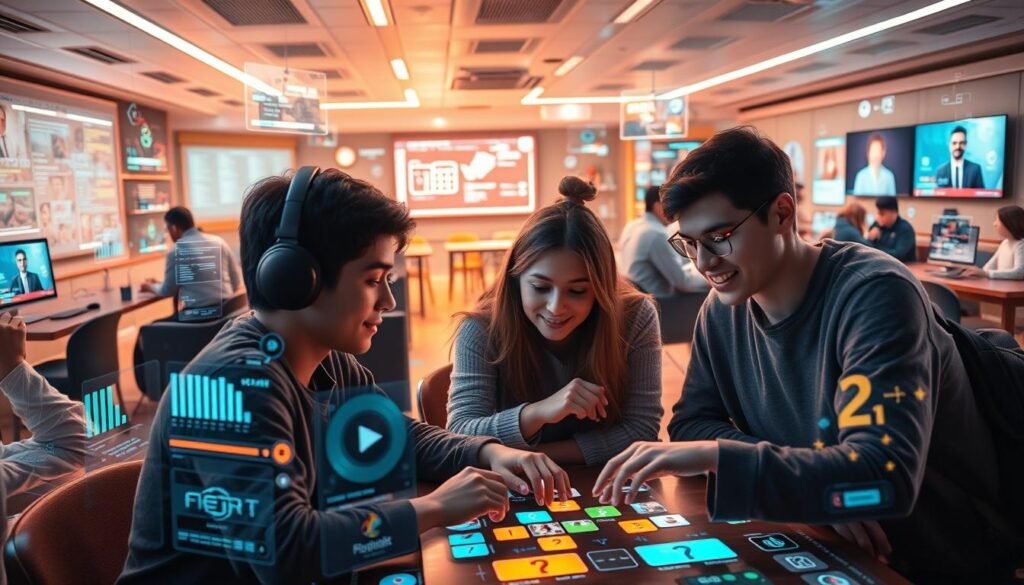
Kahoot! turns quizzes into games, making learning exciting. It uses timed quizzes and leaderboards to keep students engaged. This adds fun to the learning process.
Codecademy uses gamification to track skill growth. It rewards users with badges and progress bars. This makes learning to code rewarding, as users see their progress.
| Platform | Gamification Elements | Learning Outcome |
|---|---|---|
| Duolingo | Points, Badges, Leaderboards | Language Learning |
| Kahoot! | Timed Quizzes, Competitive Leaderboards | Interactive Learning |
| Codecademy | Badges, Progress Bars | Coding Skills |
These examples show how gamification boosts engagement and learning. By using these strategies, you can make online courses more fun and interactive.
Creating a gamification strategy for e-learning needs a mix of learning goals and fun game elements. It’s key to make learning fun without losing its educational value.
First, set clear learning goals. Know what you want learners to get from the experience. Clear goals help in making a focused and effective gamification plan.
For example, to help learners remember more, use quizzes or challenges. This makes learning fun and reinforces what they learn.
Choosing the right gamification elements depends on your goals and who you’re teaching. Elements like points, leaderboards, badges, and quizzes are popular. Choose elements that match your goals and make learning better.
A good gamification strategy balances fun with learning. Make sure not to let game elements overshadow learning content. Experts say, « Gamification is not just about fun; it’s about being effective. »
« The goal of gamification is to make learning so engaging that it feels like a game, not a chore. »
To keep this balance, watch how your strategy works and tweak it as needed. Get feedback from learners and check their performance to see what’s effective.
To see how well gamification works in online learning, we need to look at different metrics and feedback. Gamification in online courses is more than just adding game elements. It’s about making learning better.
One key way to check if e-learning gamification works is by looking at how students do. We track things like how many finish the course, their scores, and how long they spend on certain parts.
This helps teachers see where gamification is helping and where it needs to get better.
Getting feedback from students is also very important. We can do this with surveys, focus groups, or direct feedback in the course.
What students say helps us understand if gamification makes learning better for them.
We use the data from performance and feedback to make gamification better. This means tweaking game elements, adjusting how hard things are, and making sure it fits with what students are learning.
By always trying to get better, teachers can keep gamification in online courses fun and effective for students.
Gamification has changed online education, but it also brings challenges. As you add gamification to your courses, knowing these challenges is key. This ensures a good learning experience for everyone.
One big challenge is when rewards become too important. Learners might focus too much on points or badges. This can make them lose their natural desire to learn.
To fix this, make sure gamification supports the learning goals, not just the rewards.
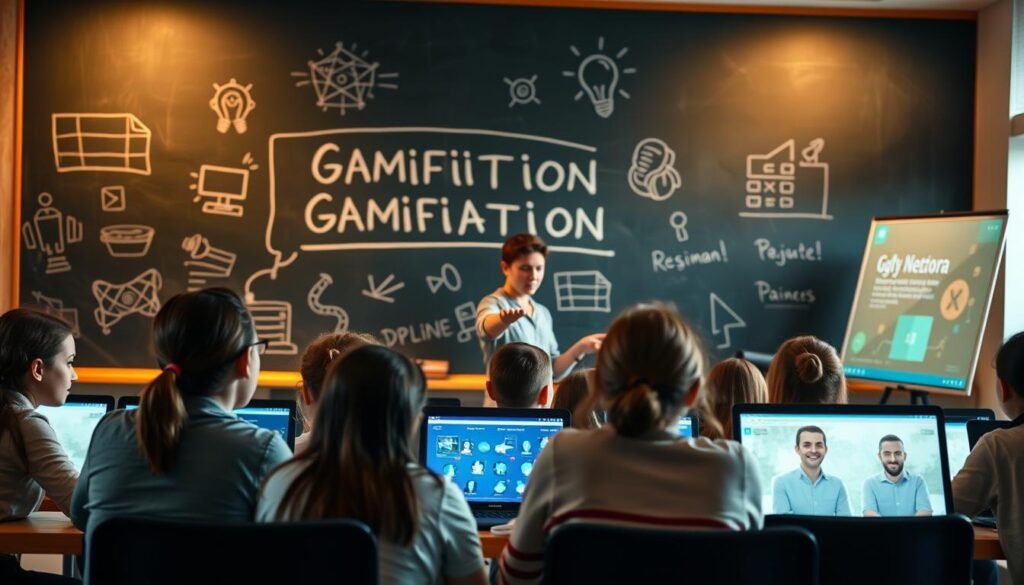
For example, reward learners for reaching milestones or mastering skills. This way, rewards and motivation to learn stay in balance.
Another challenge is keeping gamification from hurting the course’s educational value. It’s important to link gamification with your learning goals. This way, it helps, not hinders, the learning process.
Check how gamification affects learners’ engagement and understanding. Use feedback and metrics to improve your gamification. This helps meet your educational aims.
By understanding and tackling these challenges, you can make the most of gamification. This leads to engaging, effective, and high-quality online learning for your students.
Gamification in online learning is on the verge of a big change, thanks to new tech. As we look ahead, gamification is getting smarter, making learning more fun and effective.
New tech is changing online learning. Gamification will better engage learners and improve educational results.
Virtual Reality (VR) and Augmented Reality (AR) are exciting in gamification. They create real-world-like learning experiences. This makes learning complex topics easier and more fun.
VR can take you to places like historical events or distant planets. It offers a deep understanding that old teaching methods can’t match. As VR gets cheaper and more common, it will be used more in online learning.
VR isn’t just for schools; it’s also for corporate training. It helps employees learn and grow in new ways.
| Technology | Application in Gamification | Benefits |
|---|---|---|
| Virtual Reality (VR) | Immersive learning experiences | Enhanced engagement, improved retention |
| Augmented Reality (AR) | Interactive simulations | Better understanding of complex concepts |
| Artificial Intelligence (AI) | Personalized learning paths | Adaptive learning, improved outcomes |
Artificial Intelligence (AI) is making learning more personal and adaptive. AI looks at how you learn and adjusts the course to fit you. This makes learning more fun and effective.
AI ensures you’re learning at the right level. This leads to better results. As AI gets better, so will learning systems.
Using gamification tools for online courses makes learning better. The future of online learning gamification is bright, thanks to tech.

Looking ahead, gamification will keep being key in online learning. By using these trends, we’ll have more engaging and effective learning.
Gamification in distance learning has shown great results in many case studies. By adding game design to educational sites, schools can make learning better.
Khan Academy is a top example of gamification in online learning. It uses points, badges, and leaderboards to motivate students. This approach makes students want to reach their learning goals.
Khan Academy’s success is clear in its popularity and positive feedback. It shows how gamification can make learning fun and easy to get into.
Classcraft is another great example of gamification in schools. It turns the classroom into a game where students can earn rewards and work together. Classcraft shows how gamification can boost student interest and create a positive classroom atmosphere.
Looking at Classcraft’s success can help teachers learn how to use gamification in their own classrooms. This can lead to better results for students.
Educators are key in using gamification in e-learning. They make sure online courses are fun and engaging. They also help build a sense of community among students.
To get the most out of gamification, educators need to pick the right elements. They should know what their students like and need. This way, they can create a gamification strategy for e-learning that fits.
Here are some things to think about when designing your gamification plan:
As Jane McGonigal, an expert in educational technology, says, « Games can make learning more fun and effective. »
« The right game elements can make a big difference in how students learn. »
Educators also help students work together and feel part of a community. They can do this in several ways:
| Strategy | Description | Benefits |
|---|---|---|
| Discussion Forums | Students talk about course topics and share ideas | Builds community, improves understanding |
| Group Projects | Projects that need teamwork and problem-solving | Teaches teamwork, problem-solving skills |
| Peer Review | Students review and give feedback on each other’s work | Boosts critical thinking, offers different views |
By helping students work together, educators create a better learning space. This space uses gamification to its fullest.
Gamification is not just for schools anymore. It’s changing how we learn at work and throughout our lives. Companies are now using it to make learning fun and engaging.
In corporate training, gamification boosts employee engagement and learning. It makes training more fun and interactive. This leads to better learning results.
Some key benefits of gamification in corporate training include:
Big names like Deloitte and IBM have seen great results. They’ve improved employee performance and happiness through gamification.
Gamification is also key for lifelong learning and skill development. It makes learning fun and accessible. This encourages people to keep learning as they grow older.
Platforms like Codecademy and Duolingo show how well gamification works. They use fun exercises, rewards, and challenges to keep learners interested.
As we need to keep learning more, gamification in lifelong learning will grow. It will give people more chances to learn new things and stay ahead in their careers.
Gamification is changing online learning for the better. It makes learning fun, interactive, and more effective. With points, badges, and leaderboards, learners are motivated to reach their goals.
The future of gamification in online courses is bright. New technology and virtual reality will make learning even better. You’ll see more creative uses of gamification in education.
Expect to see personalized learning paths and immersive simulations. As online learning grows, gamification’s role will too. Educators can make learning more fun and effective with the right strategies.
It’s important to keep learning fun and educational. Gamification should help learners, not get in the way. This way, online courses can be both engaging and effective, leading to better learning and happier learners.
Gamification in online courses uses game design to make learning fun and interactive. It makes learning more engaging and effective.
Gamification adds fun elements like points and quizzes. This makes learning more enjoyable and immersive.
Popular elements include points, leaderboards, and badges. These help motivate learners and track their progress.
Yes, gamification makes corporate training more engaging. It helps improve employee skills and knowledge retention.
Effectiveness is measured by analyzing student performance and feedback. It’s important to improve gamification elements to meet educational goals.
Challenges include relying too much on rewards and ensuring educational integrity. It’s key to align gamification with learning objectives.
Educators should choose gamification elements that support learning objectives. They should ensure these elements don’t overshadow the core content.
Future trends include virtual reality and personalized learning systems. These advancements will make gamification even more effective.
Yes, gamification makes lifelong learning engaging. It helps individuals stay motivated and track their progress.