Address
304 North Cardinal
St. Dorchester Center, MA 02124
Work Hours
Monday to Friday: 7AM - 7PM
Weekend: 10AM - 5PM
Address
304 North Cardinal
St. Dorchester Center, MA 02124
Work Hours
Monday to Friday: 7AM - 7PM
Weekend: 10AM - 5PM

The online education market is expected to hit $325 billion by 2025. This shows a huge chance for course makers. But, with so many courses out there, making yours unique can be tough.
To do well, you must know your audience and offer content that’s valuable to them. Good marketing is key to finding your students.
By taking a clear path, you can boost your success in the crowded online learning world.
The success of an online course depends on knowing your audience well. You need to understand their needs, likes, and problems. This way, you can make a course that really speaks to them, boosting engagement and sales.
To really get your audience, start by finding out their pain points. What problems can your course solve for them? Use surveys, feedback, and trends to find these areas. By tackling these issues, you offer real value to your students.
After finding pain points, create learner personas. These are detailed pictures of your perfect students. They include who they are, what they want to learn, and how they like to learn. Making these personas helps you tailor your digital course design to fit your audience better.
It’s key to know how your audience likes to learn for instructional design. Some might like videos, others interactive stuff, or text. Knowing this lets you design a course that fits different learning styles, making learning better for everyone.
Finding a profitable course topic is key to a successful online course business. You must do thorough market research, look at your competitors, and use your own expertise.
Market research is vital to know what topics are wanted. You can use several methods like:
These methods help you understand what your audience wants in an online course.
Looking at your competitors shows you the current market. You can spot gaps by examining:
| Competitor | Course Topic | Strengths | Weaknesses |
|---|---|---|---|
| Competitor A | Marketing Strategies | Comprehensive content | Lack of interactive elements |
| Competitor B | Course Production | High-quality video content | Limited downloadable resources |
This analysis helps you make a course that’s different and better on your online learning platform.
It’s crucial to check if you know your topic well. Think about:
By checking your expertise, you can make content that really connects with your audience.
By doing market research, analyzing competitors, and checking your expertise, you can pick a profitable course topic. This will draw students to your online learning platform.
To make an online course successful, you need a solid foundation: a compelling course structure. A well-designed structure keeps students engaged and helps them learn what you want them to.
Start by outlining your course content. Break it down into manageable modules and lessons. First, identify the main topics and then organize them in a logical order.
Using course creation software can make this easier. These tools offer templates and drag-and-drop features to help you organize your content.
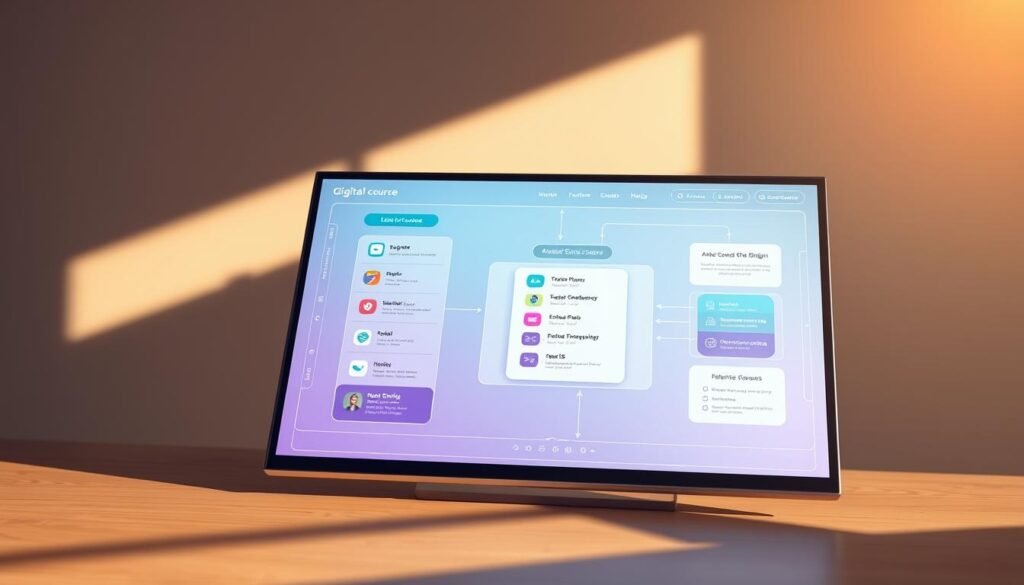
The format of your course content is key to keeping students interested. You can use videos, text, quizzes, and interactive elements like gamification.
Think about what your audience likes to learn and what your content is about. For example, videos are good for showing complex things, while text is better for detailed explanations.
Adding assessments and feedback is crucial. Use quizzes, assignments, or exams to check if students understand the material.
Discussion forums and live Q&A sessions let you talk to your students and help them. This makes their learning better and helps you see what needs work in your course.
By adding these elements, you can make a digital course design that’s both fun and effective.
To make your online course shine, focus on creating top-notch learning materials. These materials are key to keeping your students engaged and learning a lot.
Video content is a must-have for any online course. Here are some tips to make your videos stand out:
By following these tips, you can improve your elearning development and make your videos more engaging for your students.
Visual aids and handouts can make learning better by adding extra context and support. Here are some tips for designing them:
Good instructional design means creating visual aids that are both informative and fun. This helps students remember what they’ve learned.
Adding extra resources can make your course even better. Think about including:
By offering a variety of resources, you can meet different learning needs. This makes your course more effective for everyone.
To make your online course a hit, you must choose the right platform. The platform you pick is key to your course’s success.
Many online course platforms are popular for their features and ease of use. Thinkific, Teachable, and Kajabi stand out for their course tools and integrations.
Let’s compare these platforms briefly:
| Platform | Key Features | Pricing |
|---|---|---|
| Thinkific | Course builder, sales pages, email marketing | Starts at $49/month |
| Teachable | Course hosting, payment processing, analytics | Starts at $29/month |
| Kajabi | All-in-one marketing platform, course creation, website building | Starts at $149/month |
Choosing between self-hosted and marketplace platforms is crucial. Self-hosted options like WordPress with LearnDash offer control over your content. Marketplace platforms like Udemy and Skillshare have a built-in audience but limit pricing and control.

When picking a platform, focus on key features for your course’s success. Look at:
By examining these features, you can find a platform that supports your course’s growth.
Setting the right price for your online course is key. It must balance making money and attracting students. You need to think about several factors to stay competitive.
When you create your course, pricing is crucial. The price affects how successful your course will be. A smart pricing strategy can help you stand out.
There are different ways to price your course. You can use cost-plus pricing or value-based pricing. Cost-plus pricing adds a markup to the total cost. Value-based pricing sets the price based on what students get from it.
Recently, value-based pricing has become more popular. It lets creators show the real value of their courses. An expert says, « Pricing is not just about covering costs; it’s about capturing the value you create for your customers. »
« The price of something is not just a number; it’s a signal of value, quality, and exclusivity. »
Payment plans can make your course more accessible. They help students who can’t pay the full price at once. By breaking payments into installments, you attract more people.
When setting up a payment plan, remember:
Limited-time discounts can boost sales and create urgency. Offering a discount for a short time can encourage more students to sign up.
When setting up a discount, think about:
By using pricing strategies, payment plans, and discounts, you can price your course well. This will attract more students. Remember to keep an eye on how these strategies work and adjust as needed.
Using the right marketing strategies can really help your online course get noticed and sell more. You need to use different marketing channels to reach and connect with your audience well.
Building an email list is key in marketing your online course. It lets you talk directly to potential students, share useful content, and promote your course. To grow a strong email list, create lead magnets like free eBooks, webinars, or introductory lessons to draw in learners.
After setting up a lead magnet, use it to get email addresses on your website or landing page. Be clear about why people should subscribe to your list. You can also use paid advertising on sites like Facebook or Google to send people to your sign-up page.
Social media is a great way to promote your online course. It lets you reach lots of people, talk to potential students, and grow your brand. First, find out where your target audience likes to hang out online.
Make a content calendar to plan your posts, including promotions, useful content, and activities to engage with your followers. Use high-quality visuals and compelling captions to grab attention. Always reply to comments and messages quickly.

Working with influencers in your field can really boost your course’s visibility. Influencers have built trust with their followers, making their recommendations valuable. To use influencer partnerships, find influencers who match your course topic and audience.
Approach them with a proposal that shows how working together can benefit both of you. You could collaborate on content, promotions, or webinars. Make sure to clearly outline the partnership terms and track its success.
To keep students interested, make learning fun and interactive. This approach boosts their happiness and helps them learn better.
Community forums are key in online courses. They let students talk to each other and to you. You can use a special discussion board or tools like Facebook groups or Slack.
Here are some tips for setting up forums:
Live Q&A sessions let students ask questions and get answers right away. Use tools like Zoom or Google Meet for these sessions. You can also record them for later.
Here’s how to make the most of live Q&A sessions:
Working together helps students learn more and have fun. They can share ideas and learn from each other.
Here are ways to encourage teamwork:
| Strategy | Description | Benefits |
|---|---|---|
| Group Projects | Put students in groups for projects or presentations. | Teaches teamwork and communication. |
| Peer Review | Have students review and give feedback on each other’s work. | Improves critical thinking and gives valuable feedback. |
| Discussion Groups | Start small groups for in-depth discussions on topics. | Encourages deep conversations and exploration of course materials. |
By using these methods in your digital course design, you can make learning more engaging and effective.

Gathering feedback is key to improving your online course. It helps you understand what your students need. By using this feedback, you can make your course better.
To get useful feedback, use surveys and forms at key points in your course. This could be after a big module or at the end. Make sure your surveys are short and focus on important parts of the course.
Best practices for creating effective surveys include:
It’s important to look at how well your course is doing. Track things like how many students finish, their scores, and how active they are. This helps you see where students might be having trouble.
If many students stop at a certain point, it might mean the content is too hard or boring.
| Metric | Description | Actionable Insight |
|---|---|---|
| Course Completion Rate | Percentage of students completing the course | Low completion rates may indicate lack of engagement or overly challenging content |
| Assessment Scores | Average scores on quizzes and exams | Consistently low scores may suggest unclear or difficult course material |
| Student Engagement | Level of participation in discussions and activities | Low engagement may indicate a need for more interactive elements |
After you’ve gathered and looked at feedback, it’s time to make changes. Update your content, adjust the difficulty, and add more interactive parts. This keeps your course fresh and effective.
By following these steps and always asking for feedback, you can make your online course better. This leads to happier students and better results.
As your online course grows, scaling your business is key. This means planning and executing to reach more people and make more money. It’s all about growing your impact.
One great way to grow your course business is through affiliate marketing. Partner with affiliates who have followers in your niche. This way, you can sell more and reach more people. Start by finding influencers or experts to promote your course.
Another smart move is to create more course levels. This lets you teach a wider range of students, from newbies to experts. You can make a series of courses that get better with each one. This gives your students a clear path to learn.
To grow your business fast, automate tasks as much as you can. Use online learning platforms and marketing tools to handle emails, enrollments, and feedback. This saves you time to focus on making your course better.
By using these strategies, you can grow your online course business. You’ll make more money and help more people learn. It’s a win-win for everyone.
To keep your online course successful, it’s important to watch its performance closely. You should track important metrics, make smart choices based on data, and adjust to market changes. This way, you can improve your course to better serve your learners and stay competitive in elearning.
It’s vital to track key performance indicators (KPIs) to see how your course is doing. These might include how many people sign up, how many finish the course, and how engaged learners are. By looking at these KPIs, you can spot areas to get better and make choices based on facts to improve your course.
Using data to guide your decisions helps make your online course more effective. This could mean changing your course content, tweaking your marketing plan, or looking into new elearning options. By using data, you can make your course better for your learners.
The world of elearning is always changing, and being flexible is key. By keeping an eye on market trends and what learners say, you can update your course to fit new needs. Being able to adapt quickly helps you stay ahead when creating online courses.
When making an online course, start by knowing your audience. Pick a topic that’s profitable and has a good market. Then, design a course structure that’s engaging.
Make sure your course materials are top-notch. Finally, choose the right platform to host your course.
To find your audience, first, understand their problems. Create personas to guide your content. Know what they like to learn.
This helps you tailor your course to meet their needs. It makes your content more relevant and engaging.
Good marketing starts with building an email list. Use social media to reach more people. Partner with influencers to boost your reach.
Offer discounts to attract and keep students. These strategies can help grow your course’s popularity.
To keep students interested, create community forums. Use live Q&A sessions. Encourage them to work together.
This approach builds a supportive learning space. It keeps students motivated and engaged.
Feedback is key to improving your course. Use surveys and forms to gather it. Look at student success metrics too.
Make changes based on feedback. This way, you can always make your course better.
To grow your business, explore affiliate marketing. Create more course levels. Automate tasks to save time.
These steps can increase your reach and earnings. They help you make a bigger impact.
Track student engagement, completion rates, and revenue. Also, check customer satisfaction. These KPIs help you understand your course’s performance.
They guide you in making improvements. This ensures your course stays relevant and effective.
Look for software that’s easy to use. It should offer customization and payment gateway integration. Good customer support is important too.
Compare different options like Thinkific, Teachable, or Kajabi. Choose the one that fits your needs best.
Understand what your audience is willing to pay. Offer payment plans and discounts. Price your course based on its value to students.
This approach helps attract and retain students. It ensures your course is worth their investment.