Address
304 North Cardinal
St. Dorchester Center, MA 02124
Work Hours
Monday to Friday: 7AM - 7PM
Weekend: 10AM - 5PM
Address
304 North Cardinal
St. Dorchester Center, MA 02124
Work Hours
Monday to Friday: 7AM - 7PM
Weekend: 10AM - 5PM

More than 70% of teachers have seen big changes in how they teach online. This is because of new tech. You might find new ways to learn that are changing education.
Have you heard about « Zoom fatigue »? It’s real and it’s pushing teachers to use better e-learning tools. Now, they’re finding ways to make learning fun and effective.
Online learning is always changing. This is thanks to new digital teaching methods and tech trends. It’s key to know what’s driving these changes.
Several things are pushing online learning forward. These include technological advancements, new learner needs, and the search for better learning results. You’ll see more focus on:
These changes are making online learning more engaging, accessible, and effective.
Innovation in educational tech is key to online learning’s future. By using the newest digital teaching methods and tools, teachers can make learning more fun and interactive. Some big areas of innovation are:
As tech keeps getting better, we’ll see even more cool solutions for online learning.
Virtual classrooms have brought a new challenge: Zoom fatigue. It affects online learning. Understanding the impact of screen time and virtual interactions is key for a healthy learning space.
Using Zoom for online classes can cause Zoom fatigue. This condition makes you feel tired, anxious, and burnt out from too much virtual time.
Do you feel Zoom fatigue? Look out for these signs:
Spotting these signs is the first step to fight Zoom fatigue. Knowing how virtual classroom interactions affect you helps you protect your health.
To fight Zoom fatigue, try these tips in your remote learning:
Using these strategies can lessen Zoom fatigue. This makes remote learning more sustainable and effective.
« The key to successful online learning is not just about accessing information, but also about maintaining the well-being of the learner. »
As you explore virtual classrooms, remember your well-being is most important. Being aware of Zoom fatigue and using strategies to fight it ensures a better online learning experience.
Hybrid learning combines the best of both worlds. It offers a flexible and effective learning experience. This mix of in-person and online classes makes learning more engaging and personalized.
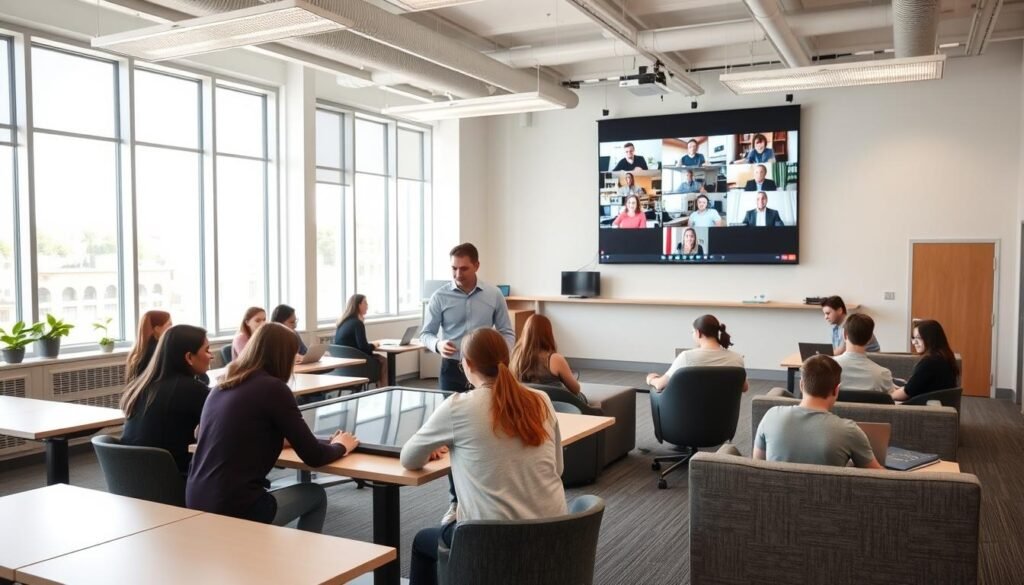
Hybrid learning models have many benefits. They offer flexibility, better student outcomes, and wider accessibility. By mixing in-person and online elements, you meet different learning needs and styles.
To make hybrid learning work, follow these best practices:
| Benefits | In-Person Classes | Online Classes |
|---|---|---|
| Flexibility | Limited flexibility | High flexibility |
| Personalization | Some personalization | High personalization |
| Accessibility | Limited accessibility | High accessibility |
By embracing hybrid learning and following best practices, you can create a better learning experience. It meets the needs of your students.
AI is changing online education by making it more flexible for each student. This change is key in today’s education, where one approach no longer fits all.
AI helps create learning paths that fit each student’s needs and skills. It uses data to find where students need more help or a challenge. This makes learning better for everyone.
Key benefits of AI-driven personalization include:
Many AI tools are making online teaching better and more fun. Some examples are:
| AI Tool | Description | Benefit |
|---|---|---|
| Adaptive Learning Platforms | Adjust the difficulty level of course materials based on student performance | Personalized learning experience |
| Intelligent Tutoring Systems | Provide one-on-one support to students, offering real-time feedback | Enhanced student support |
| Automated Grading Systems | Streamline the grading process, reducing instructor workload | Increased efficiency |
Using these AI tools, teachers can make online learning more fun, effective, and personal. As AI gets better, we’ll see even more cool uses in education.
Microlearning is becoming key with digital teaching methods. Online course trends show a move to shorter, focused learning modules.

Microlearning breaks down learning into small chunks. This makes it easier for learners to understand and remember. It’s great for online education, where learners often have shorter attention spans.
Microlearning has many benefits. It offers shorter modules, which reduces learner fatigue and boosts knowledge retention. Here are some main advantages:
To show how effective microlearning is, let’s compare it with traditional learning:
| Learning Method | Duration | Retention Rate |
|---|---|---|
| Traditional Learning | 60 minutes | 50% |
| Microlearning | 10 minutes | 80% |
The table shows microlearning boosts retention rates and cuts learning time.
Using microlearning in your online courses makes learning more engaging and effective. As online course trends change, it’s crucial to use new digital teaching methods like microlearning.
Gamification is changing online education by making learning fun. It’s a big shift in how we teach and learn online. Gamification is leading this change.
Gamification adds game design to online learning. It includes:
Many educational sites use gamification to keep learners interested. For example:
| Platform | Gamification Element | Outcome |
|---|---|---|
| Duolingo | Points, Badges, Leaderboards | Increased user retention by 30% |
| Coursera | Badges, Certificates | Enhanced course completion rates by 25% |
| Khan Academy | Points, Badges, Progress tracking | Improved learner engagement by 40% |
By using these elements, learning sites can make education more fun and interactive. This leads to better learning results.
Interactive tools are changing online learning by making students more involved. They make learning fun and interactive, which is key for online success.
Online tools for teamwork are vital for group work and talks. Some top picks include:
These tools help students work together like they would in a classroom.
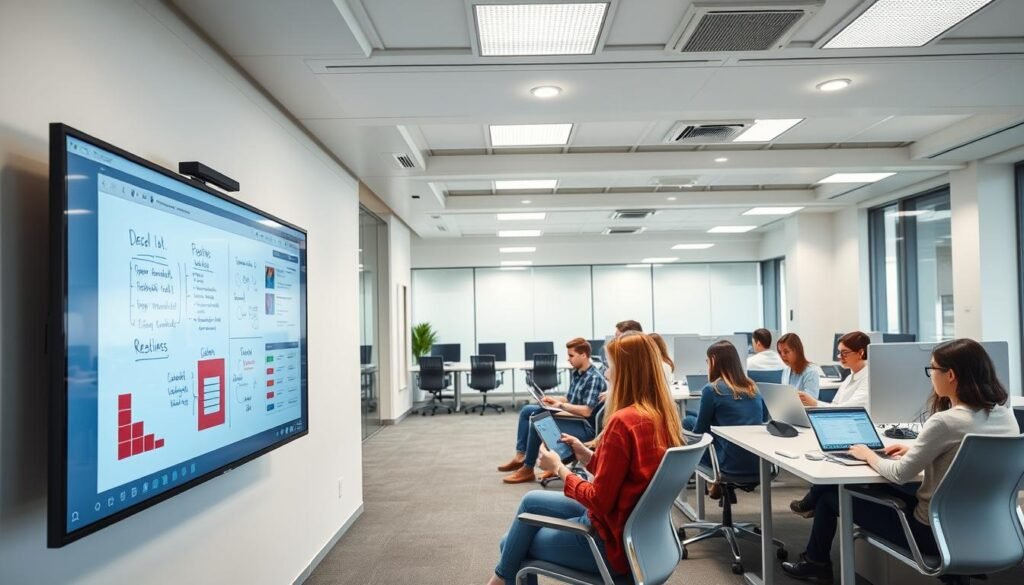
Interactive multimedia, like videos and animations, are key for better learning. A study found they can boost student interest by up to 60%.
« Interactive multimedia can change learning by making it more fun and interactive. »
Here’s a look at different multimedia tools:
| Tool | Description | Benefits |
|---|---|---|
| Interactive Videos | Videos that let students interact with the content | More engagement, better memory |
| Simulations | Interactive models of real-life situations | Hands-on learning, deeper understanding |
| Animations | Animated explanations of tough topics | Easier to grasp, visually engaging |
Online teaching is changing fast, and social-emotional learning (SEL) is more important than ever. SEL helps students do well in school and feel good, especially online where it’s easy to miss social cues.
You are key in teaching SEL online. By making your classroom a safe and welcoming place, you help students learn important skills. These include knowing themselves, controlling their feelings, and understanding others.
Creating a community is key for SEL in online classes. Here’s how you can do it:
By making students feel part of a group, you help them connect with each other and with you. This makes learning better for everyone.
There are many ways to add SEL to your online teaching. Here are some good ones:
| Strategy | Description | Benefits |
|---|---|---|
| Mindfulness Exercises | Guided mindfulness activities to reduce stress and improve focus | Enhances self-regulation, reduces anxiety |
| Emotional Check-ins | Regular check-ins to monitor students’ emotional well-being | Promotes self-awareness, supports mental health |
| SEL-integrated Curriculum | Incorporating SEL skills into subject matter instruction | Enhances academic performance, develops life skills |
By using these strategies, you can make your online classroom a better place for everyone.

As online education keeps changing, focusing on SEL is crucial. It helps students do well and feel good in their online classes.
In online education, data analytics are crucial for improving teaching methods. Educators aim to boost learning outcomes and student engagement. By using data, you can make choices that lead to these improvements.
Data analytics give insights into student behavior and learning patterns. By analyzing this data, you can spot where students need help. This lets you adjust your teaching to better meet their needs.
Learning management systems (LMS) offer valuable information on how students use course materials. This helps refine your teaching methods. Plus, analytics can help personalize learning. By understanding each student’s learning style, you can tailor content to fit their needs.
This personalized approach can increase student engagement and improve learning results.
Many schools have seen great results from using data analytics in online education. For example, a study by the Online Learning Consortium showed a big jump in student retention. Another study from Arizona State University found that data helped spot students at risk early on.
These stories highlight the power of data analytics in online education. By adopting educational technology trends and using data, you can make online learning more effective and engaging.
As you move forward in online education, remember that data-driven decisions are essential. By incorporating analytics into your teaching, you can keep your methods up-to-date and effective.
The world of teacher professional development is changing fast. Online training programs are leading this change. It’s crucial to keep up with the latest trends in online courses and remote learning.
Online training for teachers is now a key part of professional growth. It offers flexibility and is easy to access. You can take part in top-notch training from anywhere, at any time. This lets you grow professionally while still teaching.
Key benefits of online training include:
Teachers must keep learning to stay current with new methods and tech. Continuous learning helps improve your teaching and student results. It also boosts the quality of education overall.
Strategies for effective continuous learning include:
By using these strategies and keeping up with online trends, you can keep your teaching fresh and effective.
Online education is set to see big changes in the next few years. Expect major improvements in virtual classrooms and new ways to teach from a distance. The next five years will be key in shaping online teaching’s future.
Watch for the use of artificial intelligence, augmented reality, and virtual reality in online learning. These tools will make learning more engaging and create real-life experiences for students.
To stay ahead, keep learning and growing professionally. Learn about the latest in distance education and be ready to use new tech and teaching methods.
This way, you’ll be ready to offer top-notch online education. You’ll also be able to handle the changes in virtual classrooms.
Online teaching is evolving with AI learning pods and hybrid learning. Microlearning, gamification, and interactive tools are also key. These changes are making learning better and more fun.
To fight Zoom fatigue, teachers should look for signs like feeling tired and unmotivated. They can use breaks, fun activities, and flexible schedules. This helps reduce the tired feeling from too much screen time.
Hybrid learning combines the best of both worlds. It’s flexible and keeps students engaged. This mix of in-person and online learning makes learning more effective and personal.
AI is making online learning better by personalizing it. It helps teachers tailor lessons to each student. This leads to better learning outcomes.
Microlearning breaks learning into short, focused bits. It helps students remember more and feel less tired. It makes learning more enjoyable and effective.
Teachers can build community online by using forums and group projects. Virtual events also help. These methods foster connections and support student well-being.
Data is key in online learning. It helps teachers see what works and what doesn’t. This way, they can improve their teaching and help students learn better.
Teachers can keep up with trends by taking online courses and attending workshops. Joining online communities is also helpful. This way, they stay current with new tech in education.