Address
304 North Cardinal
St. Dorchester Center, MA 02124
Work Hours
Monday to Friday: 7AM - 7PM
Weekend: 10AM - 5PM
Address
304 North Cardinal
St. Dorchester Center, MA 02124
Work Hours
Monday to Friday: 7AM - 7PM
Weekend: 10AM - 5PM

Did you know that Etsy has over 5 million active sellers? Many have seen big sales boosts. If you’re an online business owner on Etsy, you might be thinking about moving to your own site.
Switching to your own website can be thrilling and scary at the same time. But, with the right advice, you can grow your online presence successfully. We’ll look at when it’s time to scale, why having your own site is good, and how to make the move smoothly.
For businesses aiming to grow online, grasping the e-commerce landscape is key. This world is complex, with many factors affecting its growth.
The e-commerce world changes fast. This is thanks to new tech, shifting consumer habits, and creative marketing. To succeed, businesses must keep up with trends and know the major players.
Several trends are shaping e-commerce’s future. These include:
These trends are changing e-commerce, offering new chances and challenges for businesses.
The e-commerce world has many important players. These include:
| Company | Role in E-commerce | Notable Features |
|---|---|---|
| Amazon | Marketplace and Retail | Prime membership, extensive logistics network |
| Shopify | E-commerce Platform | User-friendly interface, extensive app store |
| eBay | Marketplace | Auction-style sales, diverse product range |
Knowing these players and their roles helps businesses find partners, competitors, and growth opportunities.
Expanding from Etsy to your own website is a big step in growing your online business. Knowing when to make this move is key.
There are several signs that it’s time to grow your e-commerce business. These include:
To better understand these signs, let’s look at some data:
| Indicator | Description | Benefit |
|---|---|---|
| High Sales Volume | Consistently meeting or exceeding sales targets | Increased Revenue |
| Loyal Customer Base | Customers repeatedly purchasing from your shop | Enhanced Customer Loyalty |
| Need for Control | Desire for more control over branding and customer experience | Improved Brand Identity |
Checking your sales performance is vital to decide if it’s time to scale. Look at your sales data, understand your customers, and find ways to improve.
By looking at your sales and recognizing the right time to move, you can make a smart choice for your business.

Having your own e-commerce site has many benefits for businesses. It lets you make your online store fit your brand perfectly.
With your own site, you have total control over your branding. You can make your website look and feel like your brand. This helps you connect better with your audience.
You can also share your brand’s values and mission clearly. This sets you apart from others and builds a loyal customer base.
A personalized e-commerce site makes shopping better for customers. It helps keep them coming back. You can make it easy for them to find what they want.
By customizing the shopping experience, you make customers happier. This leads to more repeat business and good word-of-mouth.
Having your own site gives you deep analytics and insights. You can see how customers behave and what sells well. This helps you understand your business better.
With these insights, you can improve your business. You can make your marketing and products better. This helps your business grow.
A successful e-commerce site offers a smooth shopping experience. It has an easy-to-use design and works well. Customers want to find what they need fast and without trouble.
A good navigation menu is key. It helps customers find products easily. Your site should have a clear menu that organizes products well.
Consider adding features like:
Easy navigation makes customers happy. It keeps them on your site longer, increasing the chance they’ll buy.
Most people shop on their phones. So, your site must be mobile responsive. A responsive design looks great on any screen size.
This means:
If your site isn’t mobile-friendly, you might lose sales to competitors.
Keeping customers’ info safe is crucial. Secure payment processing protects their data and builds trust. Key elements include:
Secure payment processing reassures customers. It makes them more likely to shop with you again.
In short, a great e-commerce site is both beautiful and functional. Focus on easy navigation, mobile friendliness, and secure payments. This way, you’ll attract and keep customers, boosting sales and growth.
There are many e-commerce platforms out there. Picking the right one is key to your online business’s success. The platform you choose will shape your online store. It affects sales, customer experience, and how smoothly your business runs.
Many e-commerce platforms are popular among online business owners. Here are a few:
Each platform has its own strengths. For example, Shopify is easy to use and has a big app store. WooCommerce is great for WordPress users because it’s flexible and customizable.

When picking an e-commerce platform, consider a few key factors. This ensures you choose the best platform for your business.
| Factor | Description | Importance Level |
|---|---|---|
| Ease of Use | How user-friendly is the platform for you and your customers? | High |
| Customization Options | Can you tailor the platform to fit your brand and business needs? | High |
| Integrations | Does the platform support integrations with third-party apps and services? | Medium |
| Scalability | Can the platform grow with your business, handling increased traffic and sales? | High |
| Security | How robust are the platform’s security features to protect your customers’ data? | High |
By looking at these factors and thinking about your business’s needs, you can make a smart choice. This will help you find the best e-commerce platform.
Creating an e-commerce website that attracts your target audience needs careful planning. It’s key to think about several important factors for your online store’s success.
Your website’s design should appeal to your target audience. It should have intuitive navigation, compelling visuals, and clear calls-to-action. Forrester Research found that a well-designed website can boost customer loyalty and retention by up to 25%. A user-friendly interface is vital for turning visitors into customers, says an e-commerce expert.
To make your website appealing, follow these design tips:
When setting up your e-commerce website, following laws and regulations is crucial. This includes data protection, consumer rights, and intellectual property. Not following these can lead to big fines and harm your reputation.
As
« The General Data Protection Regulation (GDPR) has set a new standard for data protection, and e-commerce businesses must ensure they are compliant to avoid hefty fines. »
Understanding and following these rules protects your business and builds trust with customers.
Key legal considerations include:
Connecting your Etsy shop with your e-commerce website is key for a strong online presence. It lets you handle products, orders, and stock levels on both platforms smoothly.
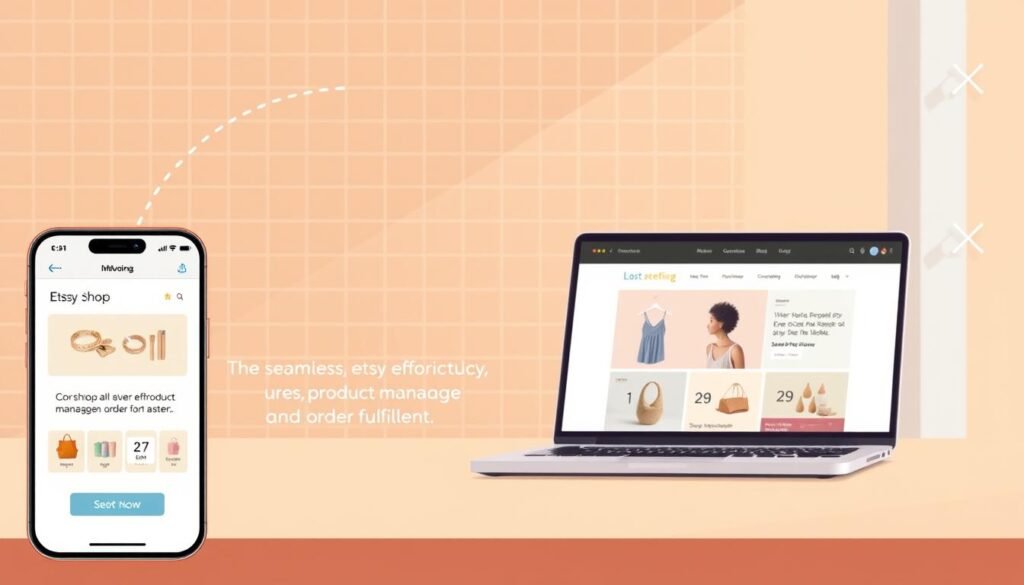
Many tools and plugins help link your Etsy shop with your website. You can use APIs or services like Etsy Marketplace Integration or TradeGecko. These tools help keep your product listings, orders, and stock levels in sync.
« Choosing the right tools is crucial, » an e-commerce expert notes. « It streamlines your work and boosts customer happiness. »
Managing stock well is vital when selling on different platforms. To avoid selling out and keep product info up-to-date, sync your stock levels. Use inventory software that works with multiple sales channels.
By linking your Etsy shop with your website and managing stock well, you improve your work flow. This also makes shopping better for your customers. As « a unified commerce strategy is key to success in the modern e-commerce landscape », experts say.
Now that your e-commerce site is live, it’s time to market it. Good marketing is key to attracting and keeping customers. In today’s competitive online world, it’s crucial.
Building an email list is a strong way to keep in touch with customers. Add a sign-up form to your site. Offer discounts or free shipping to get people to subscribe.
« Email marketing is a key component of a successful e-commerce strategy. »
Send out regular, engaging emails. This helps build a loyal customer base.
Social media is a great way to reach more people and build your brand. Create content that your audience will love. Use paid ads to get your message out there.
Consistency is key in social media. Post often and talk to your followers.

SEO is important to get your site seen in search results. Work on your product descriptions, meta tags, and images. Long-tail keywords can help attract the right visitors.
With these marketing strategies, you can bring more people to your site. This can lead to more sales. A good marketing plan is ongoing and needs constant improvement.
As your e-commerce business grows, customer service becomes key. It’s not just fixing problems. It’s about creating a bond with your customers that keeps them coming back.
Quickly answering customer questions is vital. When customers feel listened to, they become loyal fans. Here’s how to improve your replies:
Trust and loyalty are more than just answering questions. It’s about making every interaction positive. Here’s how to do it:
By focusing on these areas, you can build a loyal customer base. Remember, great customer service means going the extra mile. It’s about creating a positive experience that keeps customers coming back.
As your ecommerce business grows, it’s key to check your progress often. You need to adjust your strategy to keep growing. This means watching your website analytics to see what your customers like.
Looking at website traffic and sales data shows where you can get better. This lets you improve your marketing and make your customers happier. By tracking important numbers, you can make smart choices to grow your business.
Changing your strategy is crucial when the market or customer needs shift. Being quick to adapt helps you stay ahead. By always checking your analytics and making choices based on data, you can keep improving and succeed in the long run.
You might be ready to scale if you sell a lot, have loyal customers, and want more control over your brand. This includes how customers experience your products.
Your own website lets you control your brand better. It also improves the customer experience and gives you deeper insights into your sales.
A good site is easy to navigate, works well on mobile, and has secure payment options. This makes shopping smooth and safe.
Look for a platform that’s easy to use, lets you customize, and integrates with other apps. It should also grow with your business.
Use tools and plugins to link your Etsy shop with your website. This way, you can manage everything from one place.
Build an email list, use social media well, and learn about SEO. These steps can help you draw in and keep customers.
Answer customer questions fast and solve problems well. This builds trust and loyalty with your customers.
Look at your website traffic and sales to find areas to improve. Adjusting your strategy can help your business keep growing.