Address
304 North Cardinal
St. Dorchester Center, MA 02124
Work Hours
Monday to Friday: 7AM - 7PM
Weekend: 10AM - 5PM
Address
304 North Cardinal
St. Dorchester Center, MA 02124
Work Hours
Monday to Friday: 7AM - 7PM
Weekend: 10AM - 5PM

Did you know over 70% of online shoppers find new products on social media? As an online store owner, you’re probably using Facebook and Instagram to reach your audience. These platforms are key for maximizing ecommerce success with the rise of online shopping.
The fight between Facebook and Instagram Shopping is getting fiercer. Many store owners are unsure which platform is best for their business. We’ll explore the features, benefits, and drawbacks of each. This will help you choose wisely.
Ecommerce platforms are key to online shopping. Knowing how they work is crucial for success. It’s important to understand their basics and how to use them to grow your business.
Ecommerce means buying and selling online. It has changed the retail world, making it easier for businesses to sell globally. Digital storefronts let customers shop from home.
The ecommerce world is varied, with different business models. These include B2B, B2C, and C2C. Knowing these differences helps in creating a good ecommerce strategy.
Social media is vital for ecommerce. It helps businesses show products, talk to customers, and sell more. Sites like Facebook and Instagram make selling online easier.
Using social media well can boost your ecommerce. As you plan your ecommerce strategy, think about social media’s role.
Facebook Shopping has become key for businesses wanting to grow online. It’s an e-commerce platform with features to boost your store’s visibility and sales.
Facebook Shops lets you create a unique online store linked to your Facebook page. Key features include:
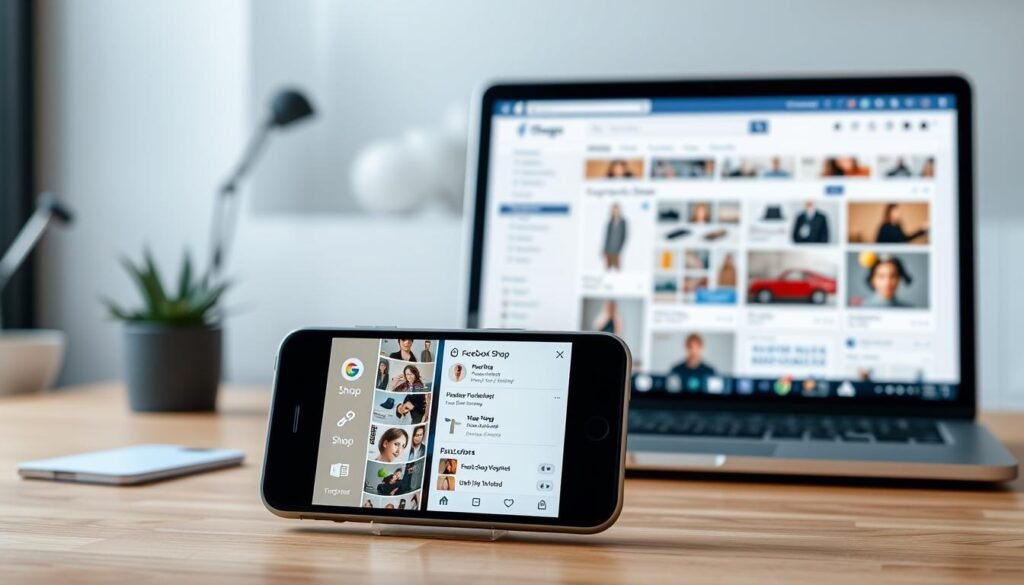
Setting up your store on Facebook is easy. Here’s how:
Many businesses have seen big wins with Facebook Shopping. Here are a few:
| Business | Industry | Results |
|---|---|---|
| XYZ Clothing | Fashion | 30% increase in sales |
| ABC Electronics | Electronics | 25% boost in customer engagement |
| 123 Home Goods | Home Decor | 40% rise in website traffic |
These stories show Facebook Shopping’s power for businesses across different fields. By using its features and setting up a great shop, you can boost your online sales.
Instagram Shopping is a key player in the world of electronic commerce. It offers a unique shopping experience with its focus on visuals. This can really boost your brand.
Instagram Shops make shopping easy for your customers. You can tag products in your posts and stories. This makes it simple for them to buy from you.
To start your store on Instagram, you need a business profile and to follow their commerce rules. After setting up, you can tag products and create a shop section.
Key steps to setting up your Instagram Shop:
Many brands have found success on Instagram Shopping. Fashion brands can show off their latest collections. Beauty brands can share product tutorials.
Notable brands on Instagram Shopping include:
Choosing between Facebook and Instagram Shopping depends on several factors. These include the audience you want to reach and the shopping features you need. Knowing these differences helps ecommerce businesses decide where to focus their efforts.
Facebook and Instagram appeal to different age groups. Facebook attracts more users aged 25 to 65. Instagram, however, is popular among 18 to 34-year-olds.
Facebook has a more diverse user base by age. Instagram leans towards younger adults. This is key when picking a platform for your ecommerce business. For example, if your target audience is young, Instagram might be better.

Both platforms offer great shopping features. Facebook allows for detailed online stores with product catalogs and customer reviews. Instagram focuses on visuals with Shopping Tags, Product Stories, and Reels.
Key shopping features comparison:
Experts say Instagram is great for businesses with strong visuals. This shows the importance of picking the right platform for your strategy.
The shopping experiences on Facebook and Instagram are different. Facebook offers more features like product recommendations and customer reviews. Instagram focuses on easy, visual shopping.
« Instagram’s visual-centric approach to shopping makes it easier for businesses to showcase their products in a lifestyle setting. » This highlights each platform’s strengths and the need to align with your business goals.
In conclusion, understanding the differences between Facebook and Instagram Shopping is crucial for ecommerce businesses. By considering demographics, features, and user experience, you can choose the best platform for your store.
Facebook Shopping can make your online store more visible. It gives businesses a strong platform to show off their products. This way, they can reach more people.
Facebook has robust advertising options for businesses. You can make ads that target specific groups. This means your products will be seen by people who might actually want them.
Facebook Shopping works well with the Facebook Business Suite. This gives you a comprehensive management tool for your store. You can manage your Facebook and Instagram from one place. This makes it easier to talk to customers across different platforms.
Facebook Shopping lets you create extensive product catalogs. You can show off your products in a nice way. This makes it easy for customers to look through your products. It also makes them more likely to buy something.
A retail expert said, « Having a big product catalog on Facebook can really help your online sales. It makes it easier for customers to find what they want. »
« The key to successful online shopping is providing customers with a seamless and engaging experience. »
Instagram Shopping makes shopping easy with its focus on visuals. It’s great for businesses with beautiful products. You can show off your products in a fun and interactive way. This helps you build a digital store that keeps customers coming back.
Instagram loves visuals, making it perfect for businesses with pretty products. You can show your products in real-life settings. This makes it easier for people to see what you offer. It also helps get more people interested and buying.
Instagram’s Story and Reel features are great for promoting your products. Stories let you share special content and deals. Reels are for making fun, short videos. Both help you connect with your audience in a unique way.
Instagram has a huge influencer community. This is a big chance for businesses to grow their brand. Working with influencers who match your brand can get you more followers. This can make your brand more known and trusted, leading to more sales.
| Feature | Description | Benefit |
|---|---|---|
| Visual-Centric Shopping | Showcases products through high-quality visuals | Enhanced customer engagement and conversion rates |
| Stories and Reels | Dynamic, interactive content for promotions | Fosters a stronger connection with potential customers |
| Influencer Marketing | Partnerships with influencers for brand promotion | Increased brand awareness and credibility |
Facebook Shopping is a great tool for online stores, but it has its own challenges. It’s important for businesses to know these challenges to use Facebook well for their stores.
One big issue is finding your store. With so many users and products, it’s hard for people to find you. Discoverability issues can come from many places, like algorithm changes or more competition.
Being easy to find is key for any online store. On Facebook, this is tough because of all the content. To help, businesses can try a few things:
These steps can help your store be seen more on Facebook, bringing in more customers.
Setting up a Facebook Shop can be hard. It takes a lot of work, like setting up your catalog and payment options. You also need to make sure your store follows Facebook’s rules.
To make it easier, you should:

By tackling these challenges, businesses can use Facebook Shopping better. This can help them grow their online stores.
Instagram Shopping has its ups and downs. It can help your online store, but it also has its own set of problems. Knowing these challenges is key to finding ways to overcome them.
One big issue with Instagram Shopping is the few link options you have. You can only share links in your bio or through the « swipe-up » feature in Stories if you have over 10,000 followers. This makes it hard for customers to find your products easily.
Instagram’s algorithm changes often. These changes can make your store and products harder to find. It’s important to keep up with these changes and adjust your strategies to stay visible.
Dealing with Instagram Shopping’s challenges needs careful thought. Understanding these obstacles is the first step towards overcoming them.

When facing these challenges, remember to be flexible and creative. Adaptability and creativity are key to keeping a strong presence on Instagram Shopping.
Ecommerce businesses can do well on Facebook and Instagram by following the best practices. It’s important to know how to use each platform’s unique features.
Creating engaging content is crucial to grab potential customers’ attention. High-quality visuals and interesting product descriptions can boost user engagement. Here are some strategies to consider:
By using these strategies, you can boost engagement and sales. Try out different content types to see what works best for your audience.
Facebook and Instagram have great advertising tools to help you reach more people. To get the most out of your ads, create targeted ads that speak to your ideal customer.
Here are some tips for using Stories and Ads effectively:
By following these best practices, you can improve your ecommerce presence on Facebook and Instagram. This will help drive engagement and sales. Always be looking to improve and refine your strategies to stay competitive in the ecommerce world.
When you’re in the world of online shopping, picking the right social media platform is key. Both Facebook and Instagram Shopping have their own perks that can boost your online sales.
Knowing who you’re selling to is essential. Think about their age, how they shop, and what they like to see. This helps you choose the best platform for your business.
Using both Facebook and Instagram can make your online store strong. It lets you reach more people, get your brand seen more, and sell more with fun online stores.
By using both platforms, you can make your online presence strong. This keeps you ahead in the fast-changing world of online shopping.
Facebook Shopping targets a wide audience and has bigger product catalogs. Instagram Shopping is best for businesses with beautiful products. It offers a shopping experience focused on visuals.
To start a store on Facebook, create a Facebook Shop. For Instagram, connect your Instagram Shop to your Facebook catalog.
Facebook Shopping has strong ad options and works with Facebook Business Suite. It also has bigger product catalogs. This makes managing your online store easier.
Instagram Shopping is great for businesses with beautiful products. It offers features like Stories and Reels for promotions. It also has potential for influencer marketing.
Yes, using both Facebook and Instagram Shopping can strengthen your ecommerce strategy. It’s about knowing your audience and using each platform’s strengths.
Facebook Shopping can be hard to find and set up. To overcome these, make your store easy to find and simplify the setup.
Instagram Shopping has limited links and can be affected by algorithm changes. To deal with this, find ways to increase your store’s visibility and use Instagram’s features well.
To succeed, create engaging content, use Stories and Ads wisely, and take full advantage of both platforms.