Address
304 North Cardinal
St. Dorchester Center, MA 02124
Work Hours
Monday to Friday: 7AM - 7PM
Weekend: 10AM - 5PM
Address
304 North Cardinal
St. Dorchester Center, MA 02124
Work Hours
Monday to Friday: 7AM - 7PM
Weekend: 10AM - 5PM

As a creator, you’re always looking for ways to make your content better and faster. Did you know artificial intelligence can really help? It can do routine tasks for you, give you insights into your audience, and even make learning more personal.
Using artificial intelligence in your work is changing how we make courses and digital products. With AI, you can spend more time on what’s important – making content that really connects with your audience.
AI tools are getting smarter, helping creators work better and think outside the box. This change is more than a trend; it’s a big shift in how we make, share, and enjoy content.
AI’s Role in Enhancing Creativity
AI is making things easier and boosting what creators can do. It handles the simple stuff, so artists can dive into the creative stuff. This makes their work even better.
Here are some numbers that show how AI is changing the game in the creative world:
| Category | Traditional Method | AI-Enhanced Method |
|---|---|---|
| Content Creation Time | Several Days | A Few Hours |
| Personalization | Limited | Highly Personalized |
| Feedback Mechanism | Manual | Automated |
As more creators use AI, the industry is moving towards faster, smarter content making. This is good for the creators and makes the content better for everyone.
To use AI in your creative work, you must understand what AI is and how it works. Artificial Intelligence means making computer systems that can do things humans do, like learn and solve problems.
AI is not just a tool; it’s a collaborator that can make your creative work better. Knowing its history and main ideas helps you use AI in your work. This makes your content creation more efficient and creative.
The idea of AI started in the 1950s. Back then, it was about making machines that could think like humans. Today, AI has grown a lot, thanks to machine learning and deep learning.
Machine learning, a part of AI, lets systems learn from data on their own. This change has helped creators a lot. They can now look at lots of data and find insights to use in their work.
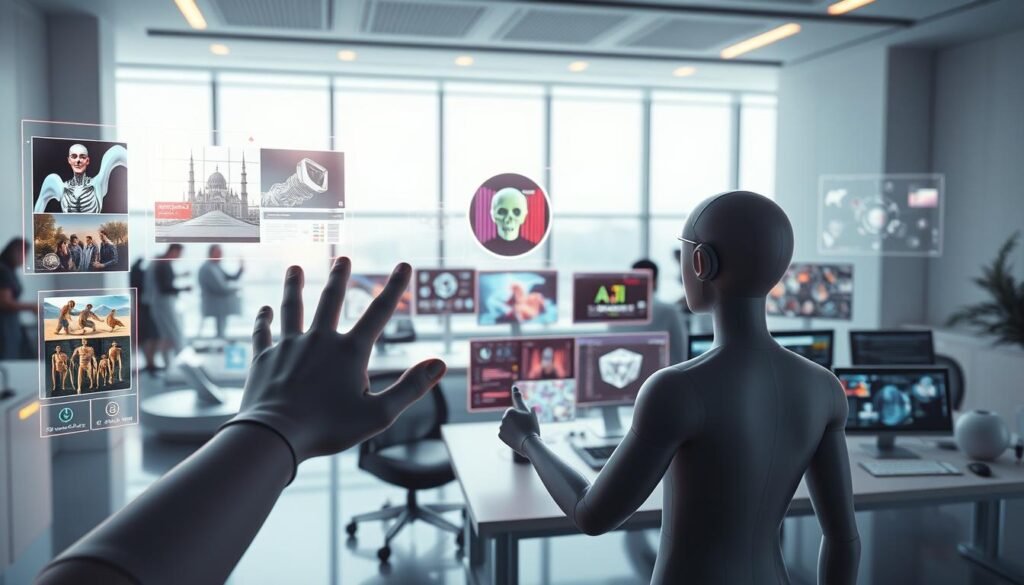
Creators need to know some important AI ideas. These include:
Understanding these ideas lets you use AI to make your content more engaging and personal. This boosts your creative skills.
AI makes creating courses easier and faster. It does this through several important features.
AI is great for artists and creators when it comes to making and organizing content. It looks through lots of data, finds what’s important, and makes top-notch content. This can be text, images, or videos, all made just for your course.
For example, AI can:
AI helps make learning experiences that fit each person. It looks at how each learner acts and what they like. This way, the course content is just right for them, making learning better.
Personalized learning has many benefits:
AI can also give feedback to learners automatically. This feedback is quick and helpful. It saves time for teachers and helps learners do their best.
| Feature | Benefit | Impact on Course Creation |
|---|---|---|
| Content Generation | Saves time and effort | Reduces the workload for creators, allowing them to focus on other aspects of the course |
| Personalized Learning | Enhances learner engagement | Improves the overall learning experience, leading to better outcomes |
| Automated Feedback | Provides timely support to learners | Enhances the learning experience and improves learner satisfaction |
AI can make your digital product design better. It helps create engaging and easy-to-use products. AI tools and insights change the design process from start to finish.
AI helps you know your audience better. It looks at lots of data to find trends and what people like. This is key for making products that users want.
Key benefits of AI-driven market research include:
| Feature | Traditional Market Research | AI-Driven Market Research |
|---|---|---|
| Data Analysis | Manual analysis, time-consuming | Automated, fast, and accurate |
| Scalability | Limited by resources | Highly scalable, handling vast data |
| Insight Generation | Based on sampled data | Provides comprehensive insights |
AI tools help make graphics, images, and videos for your digital products. They use algorithms to create designs based on what you want. This saves time and boosts creativity.
The process involves:

Using AI in your design process makes your products more appealing and effective. AI tools, like for market research or visual elements, give you an edge in the digital world.
AI is now key in the creative world, leading to many new tools and platforms. As a creator, you have lots of options to boost your work, get more done, and make new digital stuff.
Some AI tools stand out for helping with course making. CourseAI uses AI to help make courses, suggesting good content and tests. Lectora Inspire also uses AI to make course making easier, with features like auto feedback and grading.
These tools save time and make learning better by giving feedback and tests tailored to you. With AI, you can focus on making great content while the tool does the rest.
AI has changed digital product making, making design easier. Adobe Fresco uses AI for drawing, making complex designs simple. Autodesk Dreambook also uses AI to help designers try out ideas, making it easier to bring your vision to life.
These AI tools let you explore new ideas and techniques easily. By using AI, you can make amazing digital products that grab your audience’s attention.
AI plays a big role in creativity, helping with both efficiency and collaboration. It’s key to know how to use AI well in your creative work. This way, you can keep your work original and innovative.
Using AI in creative work raises concerns about losing originality. But, when used wisely, AI can boost your creativity. It can come up with ideas, do repetitive tasks, and offer insights humans might miss.
To keep your work original, see AI as a tool, not a replacement. This way, you can use AI to improve your work without losing its unique touch.
Key Strategies for Balancing Efficiency and Originality:
AI is more than just a tool; it’s a collaborator in creativity. Working with AI opens up new creative paths that might be hard or impossible alone.
For instance, AI can help with complex visuals, music, or even storylines. The goal is to know how to work well with AI, using its strengths to enhance your creativity.
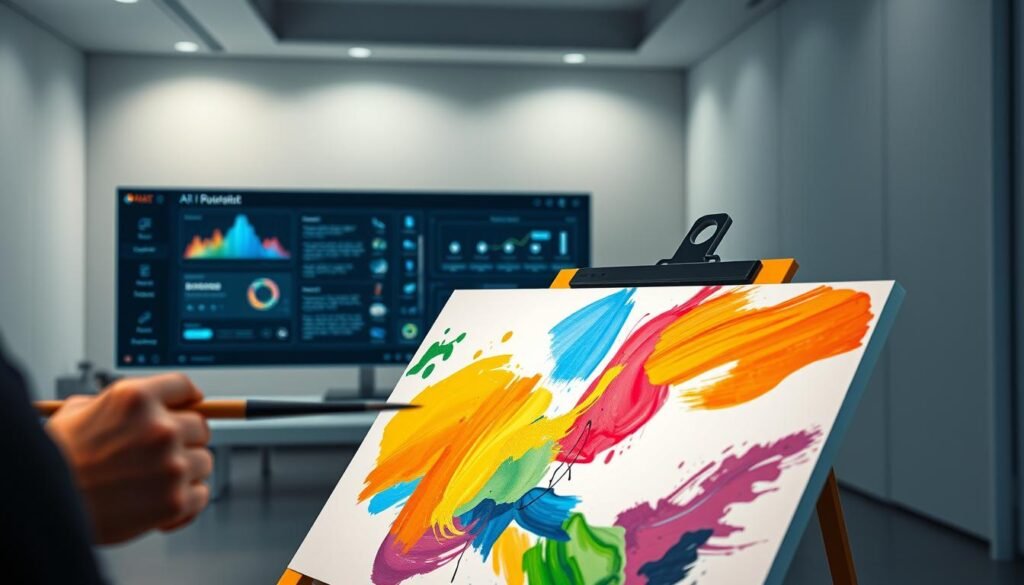
| AI Application | Creative Use |
|---|---|
| Content Generation | Drafting initial content, such as blog posts or social media updates. |
| Visual Design | Creating graphics, logos, and other visual elements. |
| Music Composition | Generating musical tracks or assisting in music production. |
By seeing AI as a collaborator, you can reach new heights in creativity and efficiency. The future of creativity is about finding a balance between human talent and AI’s strengths.
Creators are using AI to make their work easier and learning better. They add AI to their work to make courses more effective and tailored to each student.

Many creators have found AI to be a game-changer for their courses. For example, Udemy instructors have used AI tools to make top-notch content. This has led to happier and more engaged students.
« AI has changed how I make courses. It’s like having a personal assistant that makes the content fit what my students need. »
Online educators also use AI to make learning paths that fit each student. This way, students get a learning experience that’s just right for them.
| Creator | AI Tool Used | Outcome |
|---|---|---|
| Sarah Johnson | AI-driven content generator | Increased student engagement |
| John Doe | Adaptive learning software | Improved student outcomes |
Companies are also using AI to boost their learning and development programs. They use AI tools to make better training materials and help employees do their best.
For instance, big names like IBM and Microsoft are making special training for their employees. It’s all about meeting their specific needs.
Using AI in your creative work can change the game, but it comes with hurdles. As you start using AI for content, knowing the challenges and how to beat them is key.
One big challenge for creators is the need for technical know-how. Many don’t have the skills to use AI tools well.
Another issue is bias in AI algorithms. If the data used to train AI is biased, so will the AI’s output. This can harm the quality and fairness of your content.
To beat these challenges, you need a solid plan for using AI in content creation. This means investing in training for your team to learn the tech.
Start small by testing AI tools in small projects. This lets you see how they work before using them more widely.
Knowing the common problems and how to solve them helps you smoothly move to AI-driven content. This forward-thinking way ensures you get the most from AI solutions for creative industries while avoiding issues.
Exploring AI’s potential in your creative work is exciting. It’s key to keep up with new trends in AI for creators. Advances in artificial intelligence are opening doors for better course making and digital product design.
Several trends will shape the future. Expect to see advanced AI tools for personalized learning and automated content. These will let you focus on creative decisions, while AI handles routine tasks.
AI’s role in creativity is vast. It will help you make more innovative and engaging content. Using AI, you can improve your workflow, products, and stay competitive.
AI for creators uses artificial intelligence to help with making content. It can spark ideas, do routine tasks, and make learning personal. This makes creating content better and faster.
AI-driven content creation uses AI tools to make, sort, and improve content. It boosts productivity, quality, and personalization. This helps you connect better with your audience.
AI tools for creatives help with making content, editing images and videos, and learning. They make your work smoother, better, and more engaging.
AI helps artists by sparking new ideas, doing repetitive tasks, and making content personal. It also aids in editing images, picking colors, and changing styles. This lets you focus on being creative.
Creative industries use AI for making content, market research, and design. To use these, integrate AI tools, train your team, and keep up with AI trends.
Use AI to boost your creativity, not replace it. Automate tasks, get ideas, and insights from AI. But always keep a human touch and creative control.
Avoid relying too much on AI, not being clear about AI use, and ignoring AI mistakes. Keep human oversight, check AI work, and learn about AI best practices.
New AI trends include better language processing, AI in video and images, and smarter personalization. Stay updated, go to industry events, and try new AI tools.