Address
304 North Cardinal
St. Dorchester Center, MA 02124
Work Hours
Monday to Friday: 7AM - 7PM
Weekend: 10AM - 5PM
Address
304 North Cardinal
St. Dorchester Center, MA 02124
Work Hours
Monday to Friday: 7AM - 7PM
Weekend: 10AM - 5PM

Are you thinking about taking online courses? You’re joining a big group changing how we learn. Over 25% of learners in the U.S. are now in online education. This move to digital learning is because it’s flexible and easy to get to, something old classrooms can’t always offer.
It’s important to know what you want from these online classes. You might want interactive lessons, help from teachers, or courses that fit your life. People have different needs and hopes for their learning.
Online courses are getting more popular because they fit into your busy life. You can learn while working, taking care of family, or just staying home. Virtual classes are made for your convenience.
Knowing why you chose online learning helps you get the most out of it. Many students want to learn new skills or improve what they already know. This is great for career growth.
The move to e-learning is all about flexibility. You can learn from anywhere, at any time. This is perfect for those with tight schedules or living far away.
Online learning lets you balance work, life, and school better. With virtual classes, you can join classes and do homework without being in a classroom. This helps you manage your time better.
Many students choose online learning to gain new skills or knowledge. Online courses let you learn new things or dive deeper into a subject. This can really help your career grow.
When you look for digital courses, knowing what matters is key. There are important features that can make your learning better and more satisfying.
Interactive content keeps you interested and motivated. Online courses with videos, quizzes, and discussions work best. They grab your attention and make you want to participate.
For example, interactive simulations can help you grasp tough ideas. Gamification elements, like badges and leaderboards, also make learning fun.
A well-organized course makes learning easier. You should be able to move through the course smoothly and know what to do next.
A clear outline, with modules and lessons in order, keeps you focused. Also, having a schedule and deadlines helps with managing your time.
| Feature | Importance | Benefits |
|---|---|---|
| Interactive Content | High | Enhances engagement, improves understanding |
| Clear Structure | High | Aids navigation, improves time management |
| Accessibility | High | Allows learning anywhere, anytime |
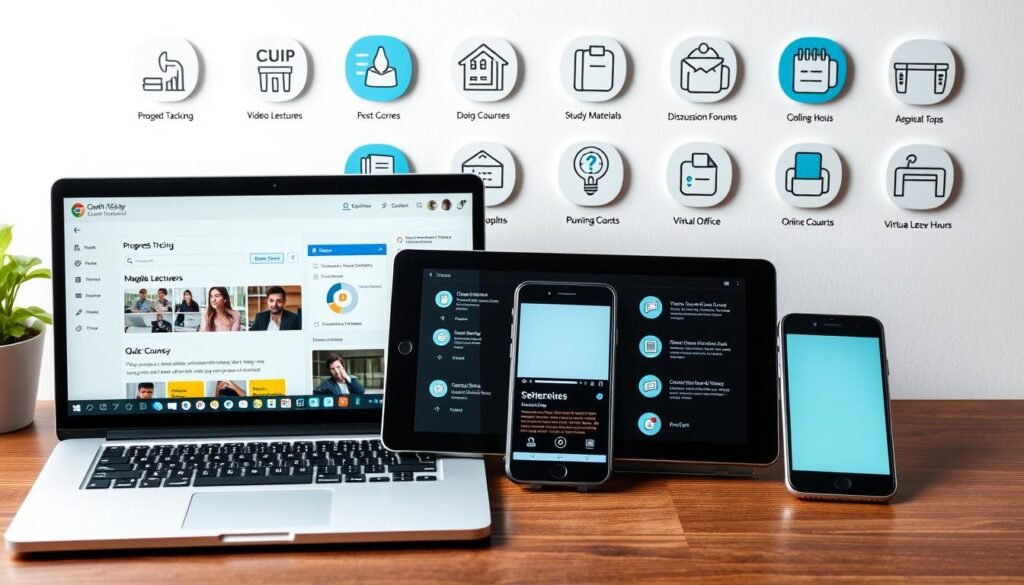
Being able to access your course on different devices is a big plus. You should be able to study on your computer, tablet, or smartphone, wherever you are.
It’s important that the course works on many devices and browsers. This lets you study whenever and wherever you want.
In web-based learning, instructor support is key to success. As you take online courses, the role of instructors is crucial. They help with learning and answer your questions.
Good remote education means more than just course materials. It also means having support when you need it. Instructor availability makes learning more engaging and productive.
It’s important to have instructors ready to answer your questions. This helps you clear doubts and keep moving with your studies. Look for courses that let you reach out through email, live chat, or video calls.
Having accessible instructors offers many benefits:
Talking with peers in forums is also key in online learning. It builds a community and offers chances for teamwork. By joining these forums, you get to see different views, share ideas, and learn from others.
Peer engagement brings many advantages:
| Benefit | Description |
|---|---|
| Diverse Perspectives | Get insights from people with different backgrounds and experiences. |
| Collaborative Learning | Work on projects together and share knowledge to reach goals. |
| Community Building | Feel a sense of belonging and connection with others learning too. |
When picking an online course, think about the instructor support and chances to talk with peers. These factors can really improve your learning, making it more fun and effective.
In e-learning, practical applications are very important. They connect theory with real life. Online courses that use practical elements make learning more relevant and useful.
Real-world examples and case studies are key in online learning. They show how theories work in real jobs. By looking at case studies, you learn to solve problems and understand successes and failures.
Real-world examples make learning fun and show how course material is useful for your career. They make complex ideas easier to grasp.
Hands-on projects are also vital in online learning. Doing projects lets you apply what you’ve learned. This experience is very valuable in the job market.
Online education combines real-world examples, case studies, and projects. This way, you get a full learning experience. It prepares you for the modern workplace. You become an active learner, not just a passive receiver of information.
When you take virtual classes, you want feedback that’s on time and helpful. This feedback is key to learning well. It lets you know how you’re doing and how to get better.

Good feedback does more than just point out mistakes. It gives you tips to get better. For students learning online, getting feedback quickly is very important. It keeps you interested and motivated.
Feedback that’s both timely and helpful is very valuable. It helps you:
Timely feedback lets you use what you’ve learned right away. This helps you understand better and avoid mistakes.
Online classes use different ways to check your understanding. This suits different learning styles and shows your skills in many ways. Some common methods are:
Using many assessment methods helps you learn more and develop a wide range of skills.
In summary, when you’re learning online, you expect feedback and assessments that are timely, helpful, and varied. These expectations are crucial for a good learning experience.
When you take digital courses, technology is key to your learning. The right tech can make your online education more engaging and effective.
Online learning platforms use technology to give you a smooth and interactive experience. They offer easy-to-use interfaces, multimedia, and tools for talking and working together.
Online learning tech focuses on easy-to-use platforms. You should be able to move through your courses without tech problems. A good platform lets you focus on learning, not tech issues.
Today’s learning systems are made for you. They have simple navigation, clear steps, and work on many devices. This makes sure you can study whenever and wherever you want.
« The key to successful online learning is not just the content, but how that content is delivered. A user-friendly platform is essential for keeping students engaged. »
| Feature | Description | Benefit |
|---|---|---|
| User-Friendly Interface | Easy navigation and clear instructions | Reduces frustration and increases study time |
| Responsive Design | Works across various devices | Allows studying anywhere, anytime |
| Multimedia Elements | Includes videos, images, and interactive content | Enhances engagement and understanding |
Multimedia is key to better learning. Videos, images, and interactive content make hard info easier to get. They make learning fun and engaging.
Videos show complex ideas clearly. Interactive quizzes help you remember what you’ve learned. This mix of content fits different learning styles, helping you learn your way.
Online learning is getting better with new tech like AI and virtual reality. These tools can make learning even more personal and real. They promise to offer unique learning paths and deep educational experiences.
Online learning has grown a lot, and community is key to your success. You can now interact with peers and teachers, making learning fun and effective.

Creating a sense of belonging is important in online education. This happens through forums, live sessions, and group activities. Feeling connected helps you stay motivated and focused on your studies.
Collaborative learning is a big part of online education. By doing group projects and discussing topics, you learn more and improve your teamwork and communication skills.
When picking an online course, think about how it builds community and encourages teamwork. Look for courses with live sessions, forums, and group work. These features make learning more fun and rewarding.
When looking into online learning, it’s key to understand the costs and what you get in return. The price of online courses can differ a lot. It’s important to think about both the cost and the benefits you might get.
Many students look for affordable ways to learn online. Scholarships, financial aid, and flexible payment plans can help make online education more affordable. Many schools offer MOOCs (Massive Open Online Courses) for little or no cost. This makes it easier for people to start learning online.
Cost is important, but so is the course’s accreditation. Accredited courses mean the education meets certain standards. This makes sure your credentials are recognized by employers and schools.
| Accreditation Aspect | Description | Benefit |
|---|---|---|
| Quality Assurance | Ensures the course meets specific educational standards. | Guarantees a level of educational quality. |
| Recognition | Accredited credentials are recognized by employers and institutions. | Enhances the value of your degree or certificate. |
| Transferability | Credits earned are more likely to be transferable. | Facilitates further education or changing institutions. |
When choosing online courses, weigh the cost against the potential benefits. Remember, accreditation is key. It adds value to your education.

As you explore online education, it’s key to know about new trends. The world of distance learning is changing fast. This is thanks to new tech and what learners want.
Learning paths are becoming more personal. Online courses will fit your needs and interests. You can learn at your own speed and focus on what you love.
The job market keeps changing, and so do your skills needs. Online learning platforms will help you keep up. They offer flexibility and access to ongoing education.
By following these trends, you can grow and develop in your studies and career.
You expect online courses to have interactive content and a clear structure. You also want instructor support to enhance your learning.
Online learning is flexible, allowing you to manage work, family, and education. This flexibility is a big draw.
Interactive content like videos and quizzes keeps you engaged. A clear structure and accessibility across devices make learning smooth.
Instructor support is key. You need to be able to ask questions and get feedback quickly. This helps you stay on track.
Discussion forums help you connect with peers. They foster community and offer chances for collaborative learning, enriching your experience.
Online courses use real-world examples and projects. This helps you see how theoretical knowledge applies in practice.
Online courses use quizzes, exams, and projects to assess your knowledge. These methods help you show what you’ve learned.
Technology makes learning more engaging with multimedia elements. This includes videos and interactive simulations, making learning more effective.
Yes, many online courses focus on building community. They use group projects and discussions to foster connection among students.
Consider the course’s cost and its accreditation. Also, think about the potential return on investment. This ensures your education is a worthwhile investment.
Online learning will likely become more personalized. It will also focus on lifelong learning, helping you stay adaptable in a changing job market.