Address
304 North Cardinal
St. Dorchester Center, MA 02124
Work Hours
Monday to Friday: 7AM - 7PM
Weekend: 10AM - 5PM
Address
304 North Cardinal
St. Dorchester Center, MA 02124
Work Hours
Monday to Friday: 7AM - 7PM
Weekend: 10AM - 5PM

The global digital products market is expected to hit $1 trillion by 2025. This is a big deal.
This growing market is full of chances for entrepreneurs and businesses. They can make money from digital goods.
But here’s the best part: you don’t need to know how to code. With the right plans and tools, you can make a digital product that makes money.
In this article, we’ll show you how to make a digital product that people will love. We’ll cover the key steps to success.
Getting to know digital products is key for anyone wanting to shine online. These products are things you can sell and share online. They open up many chances for creators and businesses.
Digital products are things you can’t hold in your hand but are online. They can be informational products like ebooks or software and membership sites. What’s special about them is they can be sent right away over the internet. This makes them easy for both sellers and buyers.
You can make many kinds of digital products, depending on what you’re good at and what you like. Some common ones are:
When making digital goods, think about what you’re good at and who you want to reach. By focusing on online product development, you can make products that your customers will love. This way, you can stand out in the market.
Whether you want to design digital goods or make an online course, knowing about different digital products is the first step to success.
Starting a successful digital product means finding a niche that’s both profitable and fits your skills. This step is key. It involves knowing the market, understanding your audience, and making your product stand out.
To find a profitable niche, keep up with market trends. Google Trends and social media offer insights into what people want. By studying these trends, you can find gaps in the market for your product.
Key areas to research include:

Knowing your target audience is crucial for a digital product that they’ll love. You need to gather data on their demographics, likes, and dislikes. This way, you can make your product exactly what they need.
Consider the following when identifying your target audience:
It’s important to look at the competition to make your product unique. By studying your rivals, you can see what they do well and what they don’t. This helps you find ways to innovate and be different.
| Competitor | Strengths | Weaknesses | Opportunities for Differentiation |
|---|---|---|---|
| Competitor A | Strong brand presence | Limited product features | Enhance product features |
| Competitor B | Innovative product design | Poor customer service | Improve customer service |
By carefully researching trends, understanding your audience, and looking at the competition, you can find a niche that’s both profitable and fits your skills. This makes your digital product design and creation process better.
After finding your niche, start thinking about digital products that your target market will love. This is key to creating a digital product strategy that meets their needs.
There are many ways to come up with new digital product ideas. Here are a few:
With these methods, you can make a list of ideas. For example, in the fitness niche, you might think about an eBook on workouts, a membership site for fitness content, or a mobile app for tracking nutrition.
| Idea Generation Technique | Description | Example |
|---|---|---|
| Mind Mapping | Visual mapping of ideas | Creating a map of related fitness routines |
| SCAMPER | Modifying existing ideas | Adapting a workout routine for different fitness levels |
| Brainstorming Sessions | Group idea generation | Holding a session to discuss new fitness trends |
After listing your ideas, it’s time to check if they’re good by getting feedback from your audience. You can do this in a few ways:
Getting feedback helps you improve your digital product strategy. It makes sure you’re creating products that your audience will enjoy. This is key to developing digital offerings that meet your target market’s needs and help your business succeed.
You don’t need to be a developer to create a digital product. Many tools and platforms are available to help you start. The key is to find the right tools that match your needs and skill level.
Designing your digital product is a key step. Tools like Canva make it easy to create beautiful graphics without needing design experience. Canva has many templates and a simple interface that makes design easy.
Teachable is great for creating online courses or tutorials. It lets you organize your content, upload videos, and sell courses directly to your audience.

After creating your digital product, you’ll need a place to host and sell it. Gumroad is a popular choice for selling digital goods like ebooks, software, and membership sites. It makes it easy to get your products to customers.
Platforms like Shopify and WooCommerce can also sell digital products. They offer flexibility and many features to manage your online store.
| Platform | Primary Use | Key Features |
|---|---|---|
| Canva | Graphic Design | Templates, User-Friendly Interface |
| Teachable | Course Creation | Content Structuring, Video Upload |
| Gumroad | Selling Digital Goods | Easy Product Sales, Membership Sites |
By using these tools and platforms, you can create, host, and sell your digital products efficiently. This way, you can reach more people and increase your chances of success.
High-quality content is key to a successful digital product. It draws in and keeps customers. It also sets your product apart in a busy market.
To make great content, focus on writing and design. Write copy that speaks to your audience. Make visuals that look good and improve the user’s experience.
Writing for your digital product should be clear and to the point. Your content should be easy to get and avoid jargon. It should also meet your audience’s needs or solve their problems.
The design should be easy to use. It should have a clear layout that guides the user through your content smoothly.
Key elements of effective writing include:
For design, consider the following:
Visual content grabs your audience’s attention and boosts their engagement. This includes images, videos, infographics, and interactive elements.
The benefits of engaging visuals are multifaceted:
As noted by
« The most powerful words in the English language are ‘Tell me’, ‘Listen’, and ‘Look’. »
This quote highlights the role of visual content in communication.
Let’s look at a comparison of different visual content types in the table below:
| Type of Visual Content | Purpose | Engagement Level |
|---|---|---|
| Images | To illustrate a point or evoke emotion | High |
| Videos | To explain complex concepts or tell a story | Very High |
| Infographics | To present information in a visually appealing way | High |
https://www.youtube.com/watch?v=DWjDGVRPZwM&pp=0gcJCX4JAYcqIYzv
In conclusion, creating top-notch content for your digital product requires good writing, design, and visuals. By focusing on these, you can improve the user experience, stand out, and achieve success.
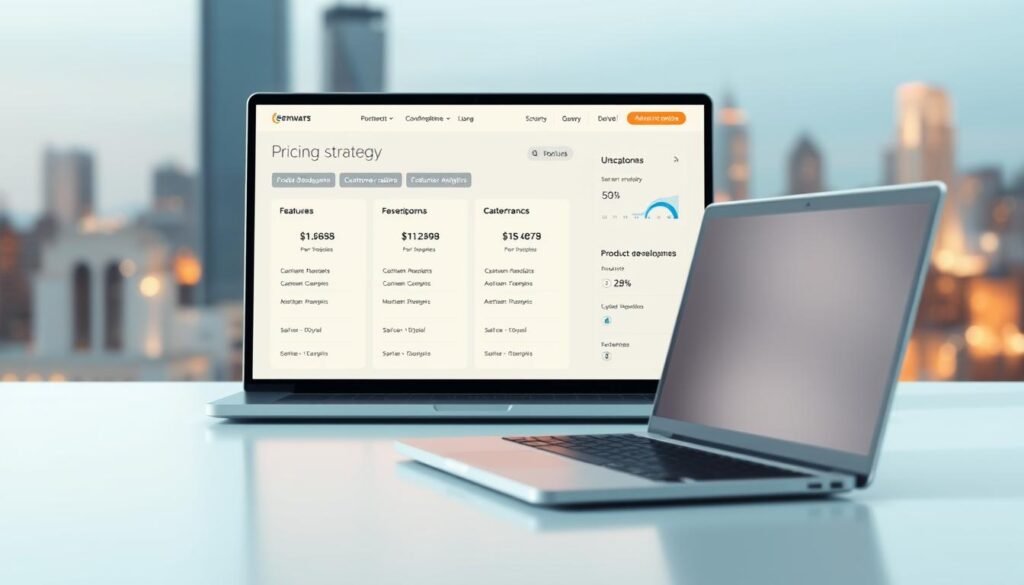
Setting the right price for your digital product is crucial. The price affects how much you make, what customers think, and how you compare to others.
There are a few ways to price your product competitively. You can use cost-based pricing, value-based pricing, or competitor-based pricing.
This method calculates the cost of making and delivering your product. Then, you add a markup to make a profit. It’s simple but doesn’t consider the product’s value to the customer.
With this approach, you price based on what your product offers to the customer. If it solves a big problem or offers great benefits, you can charge more. It’s about knowing what your customers need and pricing it right.
Here, you look at what similar products cost and price yours the same. This keeps you competitive but watch your profit margins.
After picking a starting price, test different ones to find the best. Use A/B testing to offer your product at various prices to different groups. See which price works best.
By checking how customers react to different prices, you can adjust your pricing. This helps you make more money and keep customers happy.
To make your digital product stand out, a well-planned marketing strategy is key. You need to know your audience, find what makes your product special, and use the right channels to reach customers.
Start by understanding your target audience and their needs. Do market research to find out what they like and what problems they face. This helps you tailor your marketing to speak to them.
Then, define what makes your product unique. Is it a special feature, an easy-to-use interface, or top-notch customer service? Share this in your marketing to draw in customers.
Social media is a great way to market your digital product. Use sites like Facebook, Instagram, and Twitter to reach lots of people. Make your content engaging and interactive.
For example, Instagram is great for sharing eye-catching graphics or videos. Twitter is good for quick updates or deals. Facebook lets you post more in-depth content and target ads.

Here’s a quick guide to help you choose where to focus:
| Platform | Primary Use | Target Audience |
|---|---|---|
| Diverse content, including detailed posts and ads | Wide demographic range | |
| Visual content, such as graphics and videos | Younger audience, visually oriented | |
| Short-form updates and promotions | Professionals, news enthusiasts |
With a solid marketing plan and smart social media use, you can promote your digital product well. This will help you build a loyal customer base.
Launching a digital product is a big step that needs careful planning. A good launch can create a lot of excitement and boost sales. But, a bad launch can be a letdown.
To launch well, you must prepare several important things. First, create pre-launch content to get people excited. This can be blog posts, videos, or social media teasers that share useful info.
Key Pre-Launch Activities:
Building an email list is key for a great launch. It lets you talk directly to potential buyers and promote your product. Use tools like Mailchimp or ConvertKit to manage your list and send out emails.
| Pre-Launch Activity | Description | Tools/Resources |
|---|---|---|
| Create Landing Page | Capture email addresses and build a mailing list. | Unbounce, Instapage |
| Develop Content Calendar | Manage pre-launch content across platforms. | Hootsuite, Buffer |
| Establish Launch Sequence | Guide audience through the buying process. | Mailchimp, ConvertKit |
It’s important to connect with your audience right away. This helps drive sales and gets people talking about your product. One good way is to give early buyers special content or bonuses.
Strategies for Engagement:
By planning your launch well and engaging your audience early, you can make your product a success.
After launching your digital product, it’s key to measure its success and plan for the future. You should track sales and listen to customer feedback. This helps you see what’s working and what needs a tweak. A solid digital product strategy is vital for keeping your product alive.
Keep an eye on important metrics like sales, customer happiness, and how engaged they are. This info shows you what’s good and what needs work. It guides your decisions to improve your product.
To keep your digital product thriving, always check and tweak your marketing plan. Listen to what customers say and use that to make your product better. This way, you’ll keep offering what your customers want and need.
A digital product is something you can sell online without a physical body. To make one, first find your niche. Then, think of ideas and use tools like Canva or Teachable to make it real.
To find a good niche, look at market trends with Google Trends. Know who you’re selling to and see who else is selling what you want to. This helps you make something your audience will love.
Use mind mapping and SCAMPER to get ideas. Also, ask people who might buy your product what they think. This way, you know you’re making something they’ll want.
Price your product by looking at what it costs to make, its value, and what others charge. Try different prices to see what works best for you and your customers.
Platforms like Gumroad, Teachable, and Sellfy are great for selling digital stuff. You can also use social media to get your product out there.
Keep an eye on how many you sell and what people say about it. Use this info to make your product better and market it smarter.
Always listen to what customers say and make changes based on that. Keep making your product better and tweak your marketing to keep it successful.
Yes, you can make a digital product without coding. Use easy-to-use tools and platforms to create, host, and sell your product.
To plan your digital product, know who you’re selling to and who else is out there. Set clear goals for your product. This way, you’ll make something your audience will love.