Address
304 North Cardinal
St. Dorchester Center, MA 02124
Work Hours
Monday to Friday: 7AM - 7PM
Weekend: 10AM - 5PM
Address
304 North Cardinal
St. Dorchester Center, MA 02124
Work Hours
Monday to Friday: 7AM - 7PM
Weekend: 10AM - 5PM
Did you know over 2.7 billion people use Facebook every month? This is a huge market for your online store. With so many businesses online, using Facebook Ads well is key to success. The right strategies can really help you stand out and sell more.
If you own an ecommerce business, you know how hard it is to get noticed. Facebook Ads can help you reach your audience in a smart and creative way. In this article, we’ll look at five effective Facebook Ads strategies to increase your sales and grow your digital retail business.
Facebook has billions of active users. This makes it a great chance for eCommerce businesses to grow and sell more online.
Facebook Ads are key for eCommerce marketing. They help businesses target the right people, get more brand awareness, and boost sales. With Facebook Ads, you can reach people based on their interests and behaviors.
Facebook’s huge user base lets your eCommerce business reach people worldwide. Using Facebook Ads, you can find users who might be interested in what you offer. This makes your ads more effective.
Key benefits of Facebook’s reach include:
Choosing Facebook for your eCommerce business gives you a strong platform to meet your marketing goals. Facebook’s ads are shown to users who are likely to buy from you.
The advantages of using Facebook Ads for your eCommerce business include:
Clear goals are key for any successful Facebook Ads campaign for eCommerce businesses. To get the most from your ad spend, you must know what you aim to achieve. This could be boosting sales, raising brand awareness, or getting more leads. Having clear goals helps shape your strategy and measure success.
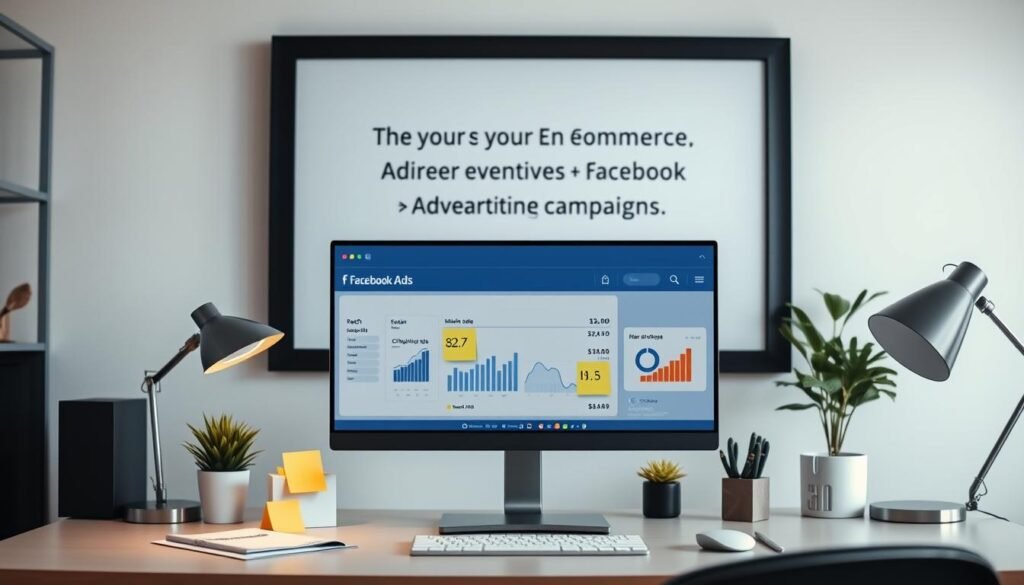
To make your Facebook Ads work, set SMART (Specific, Measurable, Achievable, Relevant, Time-bound) goals. For example, instead of « I want to increase sales, » aim for « I want to boost sales by 15% in 3 months with ads for existing customers. » This way, you can track your progress and make informed decisions.
It’s vital to match your Facebook Ads with specific sales targets for your eCommerce business. Focus on products or services that will likely sell the most. This way, you can better use your ad budget and boost your ROAS. For instance, if you’re introducing a new product, aim for a certain number of sales in the first month.
To hit this goal, use Facebook’s targeting to find potential customers interested in your product. Keep an eye on how your ads perform and tweak your strategy with data insights. This ensures your ads always meet your sales goals.
To make your Facebook Ads work best, you need to find the right people to show them to. Knowing who might buy from you and how to find them is key.
Creating custom audiences is a smart way to target your ads. It uses your customer data to find people who already care about your store. This way, your ads are more likely to convert.
To start, go to the Audiences section in Facebook Ads Manager. Choose « Create Audience » and then « Custom Audience. » Pick where your data comes from, like your customer list or website visitors.
Lookalike audiences help you find new people like your current customers. Facebook looks at your audience and finds others who are similar. This way, you can reach more people who might be interested in what you offer.
To make a lookalike audience, you need a source audience. This can be a custom audience you’ve made or a pixel on your website. Facebook then makes a new audience that matches your source audience.
Facebook also lets you target people by their demographics and interests. You can choose by age, location, gender, and more. This includes hobbies and job titles.
This targeting makes sure your ads go to people who are really interested. It helps you get the most out of your ad budget.
Here’s a quick look at Facebook’s targeting options and what they can do for you:
| Targeting Option | Description | Benefit |
|---|---|---|
| Custom Audiences | Target users based on your existing customer data. | Increases conversion rates by targeting users already interested in your brand. |
| Lookalike Audiences | Reach new users similar to your existing customers. | Expands your reach to potential customers likely to be interested in your products. |
| Demographic Targeting | Target based on age, location, gender, etc. | Ensures your ads are seen by the most relevant audience. |
| Interest Targeting | Target users based on their interests and behaviors. | Helps in reaching users who are likely to be interested in your products or services. |
Using these targeting options can really boost your Facebook Ads. It can help drive more sales for your online store.
In the world of digital retail, making great ad copy is key to success. Your ad copy is often the first thing people see from your brand. It’s crucial for grabbing their attention and driving sales.
A strong call to action (CTA) is essential for guiding people to buy. Your CTA should be clear and direct, pushing users to act. Phrases like « Shop Now » or « Get Your Discount » can boost your ad’s performance.
To write ad copy that connects with your audience, focus on what your product or service offers. Know your audience’s needs and tailor your message. A friendly tone can also make your ads more relatable and engaging.
Here are some tips to improve your ad copy:
By using these strategies, you can create ad copy that grabs attention and boosts your eCommerce sales.
In Facebook advertising, eye-catching visuals are key. Your ad’s visuals help grab potential customers’ attention. This can boost your electronic commerce business’s online sales.
For effective Facebook Ads, visuals are as important as the text. High-quality images and videos make ads more appealing. They engage your target audience better.
Choosing the right images for your products is crucial. Pick images that are high-resolution and relevant. Product lifestyle shots show how the product fits into daily life.
Make sure your images work well on all devices. Many Facebook users access it on mobiles. Your images should look great on smaller screens too.

Video content is vital in Facebook ads. Videos share more info about your product or service in an engaging way. They can tell a story, show a product, or feature customer testimonials.
When making video ads, keep them short, clear, and visually appealing. Captions and subtitles help viewers understand, even without sound.
Using both great images and videos in your Facebook Ads can help your business. It can increase your online presence and drive more sales.
To get the most out of your Facebook Ads, you need to budget well. This ensures your web commerce campaigns are cost-efficient. Good budgeting helps you manage your ad spend, increasing your return on investment (ROI) and driving sales for your online shopping business.
Setting an ad spend limit is key to controlling your Facebook Ads expenses. It prevents overspending on campaigns that may not perform well. To set an effective ad spend limit, consider your overall marketing budget and your web commerce campaign goals.
For example, if your monthly marketing budget is $1,000 and you want to spend 30% on Facebook Ads, your limit is $300. You can split this into daily or weekly budgets for consistent ad delivery.
Facebook uses an ad bidding system to decide which ads to show users. Knowing how this system works can help you optimize your ad spend and improve visibility. There are several bidding strategies, including cost per click (CPC), cost per thousand impressions (CPM), and cost per conversion.
Choosing the right bidding strategy depends on your campaign goals. For example, if you want to drive traffic to your website, CPC might be best. But if you’re aiming to increase brand awareness, CPM could be better.
| Bidding Strategy | Description | Best For |
|---|---|---|
| CPC (Cost Per Click) | You pay each time a user clicks on your ad. | Driving website traffic, generating leads. |
| CPM (Cost Per Thousand Impressions) | You pay for every 1,000 times your ad is shown. | Building brand awareness, reaching a wide audience. |
| Cost Per Conversion | You pay for each conversion (e.g., sale, sign-up). | Driving sales, generating conversions. |
By understanding and using Facebook’s ad bidding system, you can optimize your ad spend. Regularly check your ad performance and adjust your bidding strategy as needed. This is crucial for maximizing your ROI.
A/B testing is a powerful tool that can make your Facebook Ads much better. It helps you find out what works best for your e-business. This way, you can make smart choices to boost your digital retail performance.
There are several key elements to focus on when A/B testing. These include:
By systematically testing these elements, you can refine your ad strategy and improve your overall campaign performance.

Once you’ve set up your A/B tests, it’s crucial to analyze the results. Facebook provides detailed analytics to help you understand your ad performance. You can see metrics like click-through rates, conversion rates, and return on ad spend.
Use these insights to adjust your ad strategy. Scale up successful campaigns and pause or optimize underperforming ones. Continuous analysis and optimization are key to maximizing your e-business’s digital retail performance through Facebook Ads.
By embracing A/B testing and data-driven decision-making, you can significantly enhance your Facebook Ads’ effectiveness. This will help drive more sales for your e-business.
Retargeting helps you reach users who visited your online stores but didn’t buy yet. It’s a smart way to bring back potential customers who showed interest in your products. This increases the chance of them making a purchase.
Retargeting shows ads to people who already interacted with your brand. This could be visiting your website or seeing your Facebook content. It keeps your brand in their minds and might get them to buy.
To do retargeting well, you need to know how to use Facebook’s tools. The Facebook Pixel helps track user actions and show ads that match their interests.

To make your retargeting ads work better, follow these tips:
By using these strategies, you can improve your retargeting and boost sales for your online store.
To boost your online store, using Facebook Pixel is key. It tracks conversions and helps you tweak your ads. Facebook Pixel is a powerful tool for understanding your ad’s success and making smart choices for your business.
Facebook Pixel is a small code you add to your site. It tracks actions like purchases or sign-ups. First, create it in your Facebook Business Manager. Then, add the code to your site’s header.
Facebook Pixel lets you track conversions and boost your ads. It also helps you create targeted audiences for future ads.
| Benefit | Description | Impact on eCommerce |
|---|---|---|
| Track Conversions | Understand actions taken on your website after ad clicks | Measure ad effectiveness |
| Optimize Ads | Use data to improve ad performance and conversion rates | Increase ROI on ad spend |
| Build Targeted Audiences | Create custom audiences based on website actions | Enhance ad targeting and relevance |
Facebook Pixel can greatly improve your online store’s performance. It’s essential for any eCommerce business aiming to grow online.
To make your Facebook Ads better for selling online, you need to track their success. This way, you can improve your ads and sell more online.
Watch your click-through rates, conversion rates, and return on ad spend. These numbers tell you how well your ads are doing. They help you see where you can get better.
Look at your ad data to change your strategies. You might need to tweak who sees your ads, what they see, or how much you pay. This helps you reach your online business goals better.
Checking your analytics often helps you make smart choices. This way, you can keep making your Facebook Ads better. This leads to more sales and growth for your online store.
Facebook Ads can boost your online store’s visibility. They help drive sales and improve your digital retail presence. This is done by targeting specific audiences and using powerful analytics tools.
To set SMART goals, your objectives must be Specific, Measurable, Achievable, Relevant, and Time-bound. This ensures they align with your eCommerce business goals and sales targets.
Targeting the right audience makes sure your ads reach interested users. This boosts your Facebook Ads’ effectiveness and drives conversions for your virtual stores.
To create engaging ad copy, write compelling content that speaks to your target audience. Include a strong call to action to boost sales and enhance your e-business presence.
Visuals like images and videos are key in grabbing attention and conveying your message. They play a crucial role in driving sales for your electronic commerce business.
To budget effectively, set a suitable ad spend limit and understand Facebook ad bidding. Manage your budget to ensure cost-effective online shopping campaigns.
A/B testing involves comparing different ad elements to analyze performance. It helps refine your e-business advertising strategy, leading to better results for your digital retail presence.
Retargeting ads reach users who’ve interacted with your brand before. By creating these ads, you can maximize your ecommerce sales and boost your virtual storefront’s visibility.
Facebook Pixel tracks conversions and optimizes your ads. It provides insights to improve your online store’s performance and increase internet sales.
To measure success, track key metrics for your ecommerce ads. Use data insights to refine your electronic commerce advertising efforts and drive more sales through your e-business.